How Often Should You Really Replace Your Toothbrush?
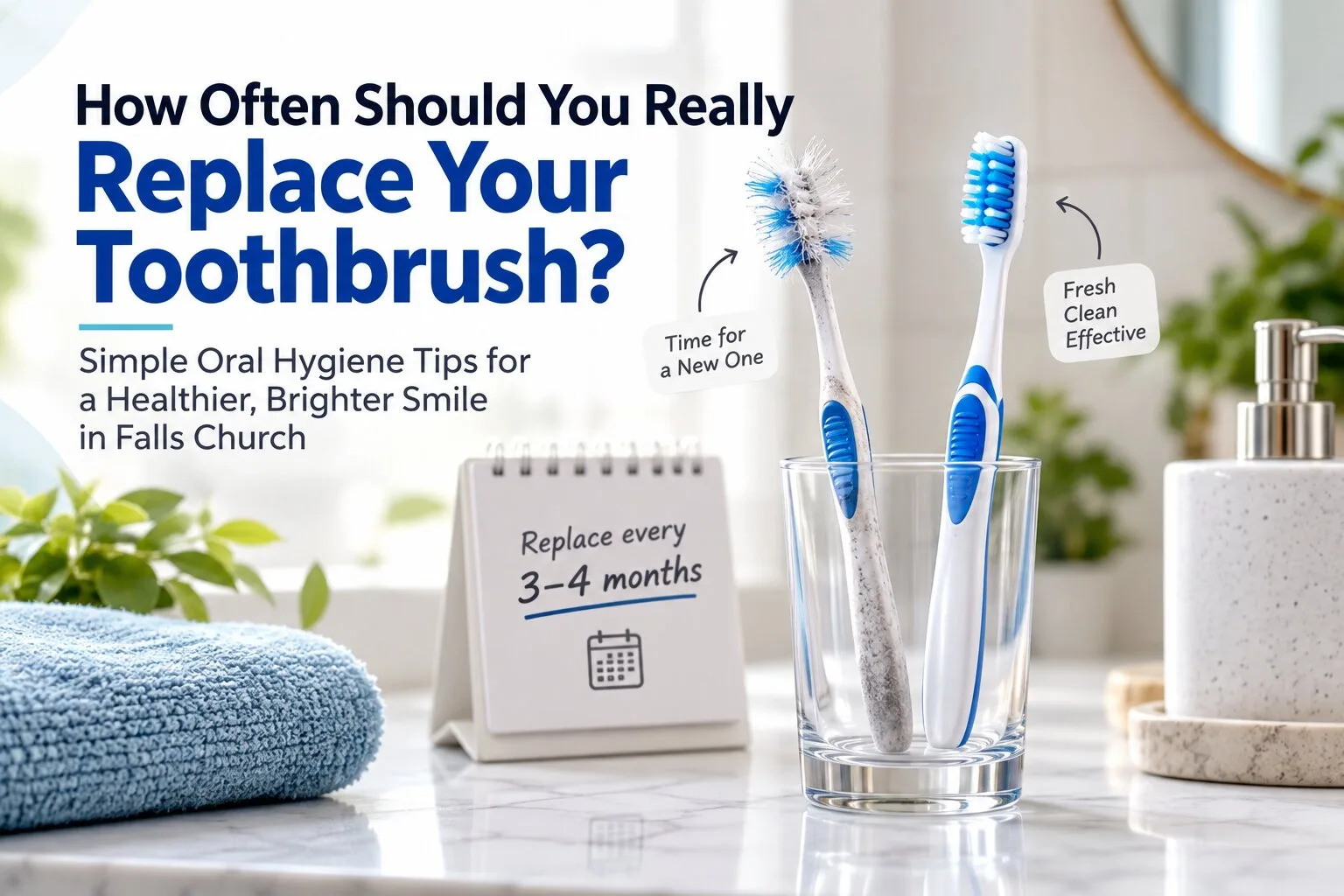
When
was the last time you replaced your toothbrush? If you're drawing a blank,
you're not alone—and you might be overdue.
Brushing
twice a day is one of the simplest and most effective habits for maintaining
healthy teeth and gums. But the toothbrush itself matters just as much as the
routine. Over time, bristles wear down, lose their shape, and become far less
effective at cleaning your teeth.
The
American Dental Association (ADA) recommends replacing your toothbrush
approximately every three to four months, or sooner if the bristles become
frayed or visibly worn. Following simple oral hygiene tips in Falls Church,
like keeping track of your toothbrush's age, can help residents maintain
healthier smiles between dental visits.
Of
course, a fresh toothbrush is only part of the equation. Pairing good home care
with regular professional checkups is the best way to keep your oral health on
track. Let's take a closer look at when—and why—you should be reaching for a
new brush.
How Often Should You Replace Your Toothbrush?
As
a general rule, you should replace your toothbrush every three to four months.
However, this timeline can shift depending on how quickly your bristles show
signs of wear. Replace your toothbrush sooner if you notice bristles that are:
·
Frayed
·
Bent
·
Flattened
·
Splayed
·
Visibly worn
Worn
bristles lose their ability to effectively clean your teeth and along the
gumline, leaving more room for plaque and debris to build up. This makes it
harder to maintain the results of your daily brushing routine, even if you're
brushing consistently.
The
same basic replacement schedule applies whether you use a manual toothbrush or
an electric toothbrush. If you use an electric model, plan to swap out the
brush head on the same three-to-four-month timeline. Following these simple
oral hygiene tips in Falls Church can make daily brushing more effective, no
matter which type of toothbrush you prefer.
Signs It's Time to Replace Your Toothbrush
Not
sure if your toothbrush has reached the end of its useful life? Watch for these
telltale signs.
The Bristles Are Frayed
Frayed
bristles are one of the clearest indicators that it's time for a new toothbrush.
Once bristles start splitting or fanning out, they can no longer clean your
teeth as intended.
The Bristles Are Flattened or Splayed
Bent
or splayed bristles struggle to reach into the small crevices around your teeth
and along the gumline, reducing your toothbrush's overall effectiveness.
You've Had the Brush for More Than Four Months
Even
a toothbrush that looks relatively normal can lose its effectiveness after four
months of regular use. Bristles wear down gradually, so the decline in performance
isn't always obvious just by looking at it.
The Brush Has Been Damaged or Contaminated
If
you've dropped your toothbrush somewhere unhygienic, or if someone else has
used it, it's time to replace it right away.
Why Does Toothbrush Replacement Matter for Oral Health?
A
worn toothbrush doesn't just look a little rough around the edges. It also
loses its ability to support your everyday oral hygiene routine.
An
effective toothbrush plays a key role in:
·
Removing plaque
·
Cleaning around the gumline
·
Supporting healthy gums
·
Reducing buildup that can contribute to cavities
and gum disease
Once
bristles become worn, they're less able to reach these critical areas, which
can allow plaque and bacteria to accumulate over time.
That
said, toothbrush replacement is only one piece of the puzzle. The ADA also
recommends brushing twice daily with a soft-bristled toothbrush and cleaning
between your teeth daily for optimal oral health.
What Type of Toothbrush Should You Use?
Soft Bristles Are a Good Choice
Soft-bristled
toothbrushes are generally recommended for most people. Contrary to popular
belief, firmer bristles don't necessarily provide a better clean; they can
actually irritate your gums and, over time, contribute to enamel wear when
combined with aggressive brushing.
Manual vs. Electric Toothbrushes
Both
manual and electric toothbrushes can be effective at cleaning your teeth. The
ADA notes that both manual and powered toothbrushes can be used effectively, so
it largely comes down to personal preference. Choose whichever type you're able
to use comfortably and correctly on a consistent basis. If you opt for an
electric toothbrush, remember to replace the brush head using the same
three-to-four-month guidance as a manual brush.
5 Simple Oral Hygiene Tips for Falls Church Residents
Maintaining
a healthy smile doesn't require a complicated routine. These five habits can
make a meaningful difference:
1. Brush
twice a day with a soft-bristled toothbrush.
2. Replace
your toothbrush every three to four months, or sooner if the bristles become
worn.
3. Clean
between your teeth daily with floss or another interdental cleaner.
4. Use
fluoride toothpaste to help protect against tooth decay.
5. Schedule
regular dental visits so potential problems can be identified early.
These
simple oral hygiene tips in Falls Church can easily become part of an everyday
routine for protecting your teeth and gums. As the ADA recommends, aim to brush
for two minutes, twice daily, and clean between your teeth once a day.
How to Take Care of Your Toothbrush Between Replacements
Proper
care can help your toothbrush stay effective for its full three-to-four-month
lifespan. Keep these habits in mind:
·
Rinse your toothbrush thoroughly after each use.
·
Store it upright rather than lying flat.
·
Allow it to air dry between uses.
·
Avoid routinely storing it in a closed container
while still wet.
·
Don't share toothbrushes with others.
·
Keep toothbrushes separated from each other,
especially in shared households.
The
ADA notes that toothbrushes can harbor microorganisms, although there is no
evidence that these microorganisms generally cause adverse health effects in
healthy users. Still, good storage habits can only help.
Don't Let Your Toothbrush Be Your Only Oral Health Routine
A
brand-new toothbrush is important, but it can't single-handedly prevent every
dental issue. A well-rounded oral health routine should also include:
·
Regular brushing
·
Daily flossing or interdental cleaning
·
Limiting frequent sugary snacks and beverages
·
Drinking plenty of water
·
Routine dental exams and professional cleanings
·
Addressing bleeding gums, tooth sensitivity,
pain, or other persistent symptoms promptly
Combining
these habits with regular toothbrush replacement gives you a much stronger
foundation for long-term oral health. And when it's time for a professional
evaluation, that's where a trusted local dental team comes in.
About Nova Dental Studio in Falls Church
Nova
Dental Studio is located in the heart of Falls Church, Virginia, and provides
general and cosmetic dental care for patients of all ages. The practice is led
by Michael J. Paesani, DMD, with a team that includes registered dental
hygienists and dental assistants. Services include general dentistry, dental
implants, root canal therapy, crowns and bridges, veneers, Invisalign, and
teeth whitening.
The
practice emphasizes detailed, patient-focused dental care and education to help
patients maintain healthy smiles. For residents looking for personalized
preventive dental care in Falls Church, Nova Dental Studio can provide guidance
based on individual oral health needs.
FAQs About Replacing Your Toothbrush
How often should I replace
my toothbrush?
The ADA recommends replacing your toothbrush every three to four months, or
sooner if the bristles become frayed, bent, or visibly worn.
Can I use a toothbrush
longer than four months if it still looks new?
Even if a toothbrush appears normal, its bristles can lose effectiveness over
time. It's best to stick to the three-to-four-month guideline rather than
relying on appearance alone.
Should I replace my
toothbrush after being sick?
Many dental professionals suggest replacing your toothbrush after an illness to
reduce the chance of reintroducing germs, especially if it's been near your mouth
during symptoms like coughing.
Are soft-bristled
toothbrushes better?
Yes. Soft-bristled toothbrushes are generally recommended because they clean
effectively without irritating gums or wearing down enamel.
How often should I brush my
teeth?
The ADA recommends brushing twice a day for two minutes each time, along with
daily interdental cleaning.
Make Toothbrush Replacement Part of Your Routine
Don't
wait until your toothbrush looks completely worn out to replace it. Aim to swap
it out every three to four months, and sooner if you notice frayed or damaged
bristles. Combine this habit with brushing twice daily, cleaning between your
teeth, and scheduling routine dental visits for the best results.
For more personalized oral hygiene tips in Falls Church, talk with the dental team at Nova Dental Studio. Schedule an appointment today for preventive dental care tailored to your needs.