Is Sedation Dentistry Right for You? Easing Dental Anxiety
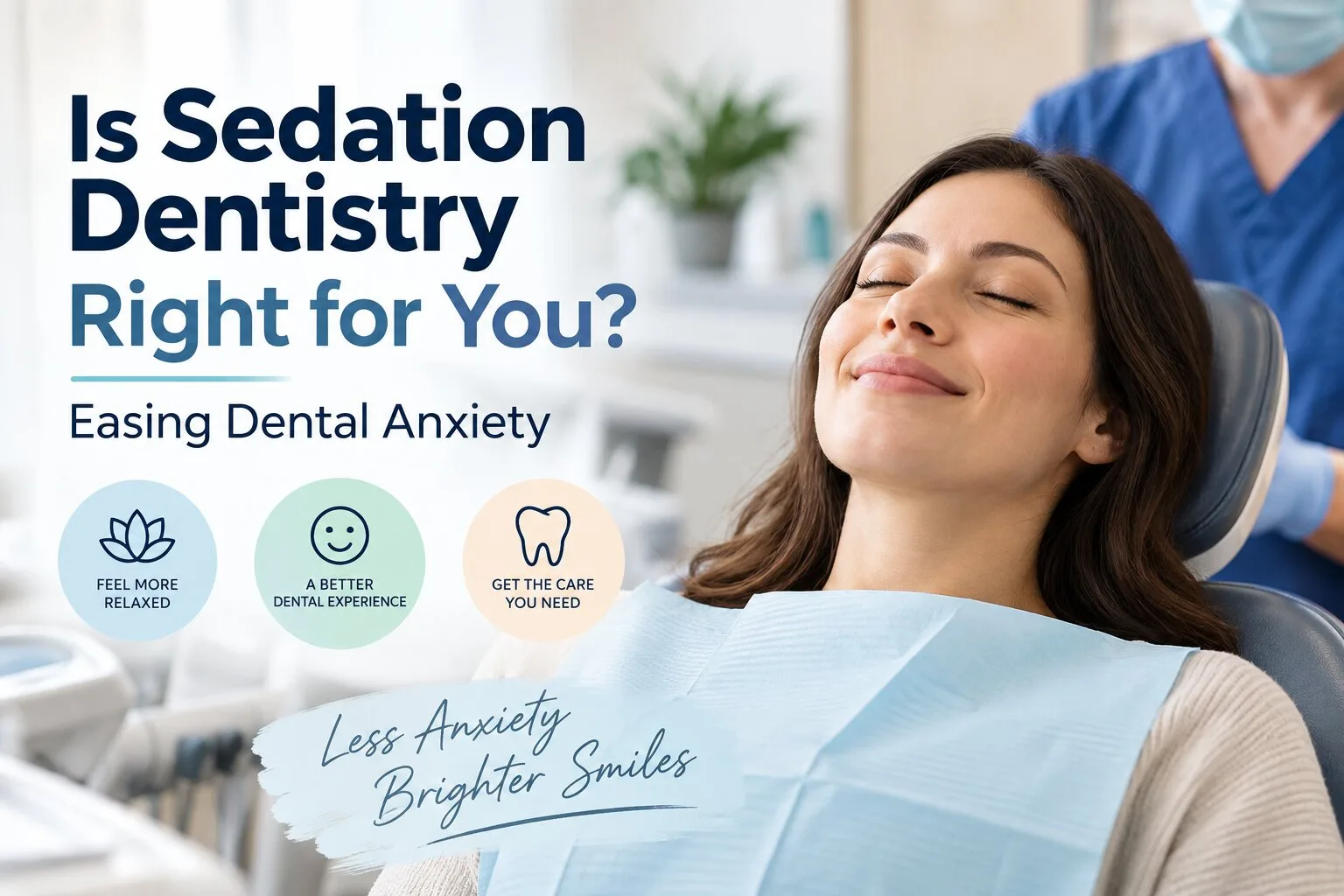
Sitting in the dental chair can bring up more than a little nervousness for a lot of people. Maybe it's the sound of the drill, the memory of a bad experience years ago, or simply not knowing what to expect. Whatever the cause, dental anxiety is real, and it affects far more people than you might think.
For
some, that anxiety is mild — a few butterflies before a cleaning. For others,
it's strong enough to cause them to cancel appointments, put off treatment, or
avoid the dentist altogether for years at a time. Unfortunately, delaying
dental care often allows small issues to become bigger, more complicated
problems down the road.
This
is where sedation dentistry comes in. It's one option that may help eligible
patients feel calmer and more comfortable during dental treatment. If you've
been searching for sedation dentistry in Falls Church because visiting the
dentist feels overwhelming, you're not alone, and there may be options worth
discussing with your dental team.
It's
important to note upfront that sedation isn't the right choice for everyone.
Whether it's appropriate depends on your health history, the procedure you
need, and a conversation with a qualified dental professional. This guide will
walk you through what sedation dentistry is, who it may help, and what to
expect, so you can have an informed conversation at your next appointment.
What Is Sedation Dentistry?
Sedation
dentistry refers to the use of medication to help patients feel more relaxed
during dental procedures. The goal isn't to put you to sleep or eliminate pain; it's to ease anxiety and help you feel more at ease throughout
treatment.
It's
worth clarifying the difference between sedation and anesthesia. Anesthesia is
typically used to block pain in a specific area (local anesthesia) or to induce
a controlled unconscious state (general anesthesia) for certain surgical
procedures. Sedation, on the other hand, is primarily focused on relaxation. In
many cases, patients remain conscious and able to respond, even while feeling
calm.
The
level of sedation used can vary quite a bit depending on your anxiety level,
the complexity of the procedure, your medical history, and your dentist's
professional recommendation. In many sedation dentistry appointments, local
anesthesia is still used alongside sedation to numb the treatment area, since
sedation alone doesn't necessarily block pain sensation.
Why Do Patients Consider Sedation Dentistry?
There
are several common reasons patients ask their dentist about sedation options.
Dental Anxiety or Fear
Some
patients feel nervous about the sounds, sensations, or sight of dental
instruments. Others carry anxiety from a previous unpleasant dental experience,
even if it happened years ago.
Sensitive Gag Reflex
A
strong gag reflex can make certain dental procedures uncomfortable or difficult
to tolerate. Sedation may be considered in these situations to help patients
stay more relaxed.
Difficulty Sitting Through Treatment
Longer
appointments can be tough for patients who struggle with anxiety or general discomfort
while sitting still for extended periods.
Avoiding Necessary Dental Care
Fear
can cause people to skip routine checkups or delay treatment they actually
need. Over time, this can lead to more extensive — and often more costly —
dental work. If fear has kept you away from the dentist, it's worth having an
honest conversation with your dental team rather than continuing to avoid care.
Types of Sedation Used in Dentistry
Sedation
dentistry isn't one-size-fits-all. There are several approaches used across the
field, each suited to different needs.
Nitrous Oxide Sedation
Often
called laughing gas, nitrous oxide is inhaled through a small mask worn over
the nose. It helps patients feel relaxed while remaining fully conscious, and
its effects generally wear off relatively quickly after the mask is removed.
Oral Sedation
In
some cases, a dentist may prescribe medication to be taken before a procedure.
It's important to follow the dentist's exact instructions regarding dosage and
timing. Depending on the medication and sedation level, patients may need
someone to accompany them to the appointment or drive them home afterward.
IV or Deeper Sedation
Deeper
forms of sedation, such as IV sedation, require additional monitoring and
specific clinical qualifications. This isn't a routine option for every dental
visit, and availability depends on the practice and the patient's individual
needs.
Who May Benefit From Sedation Dentistry?
Sedation
may be worth discussing if you:
·
Experience significant dental anxiety
·
Have had difficult dental experiences in the
past
·
Have a strong gag reflex
·
Have difficulty remaining relaxed during dental
treatment
·
Have postponed needed dental care because of
fear
·
Need extensive or lengthy dental treatment
Keep
in mind that a consultation is necessary to determine whether sedation is
appropriate for you. Your dentist will look at your overall health, current
medications, the procedure you need, and other individual circumstances before
making a recommendation.
When Might Sedation Dentistry Not Be Appropriate?
Because
sedation involves medication, an individualized health assessment is essential
before moving forward. Several factors can affect whether sedation is a safe
option, including:
·
Certain medical conditions
·
Current medications or potential drug
interactions
·
Pregnancy or other special health circumstances
·
Allergies or previous reactions to medications
·
Breathing or respiratory concerns
·
The type and complexity of the planned dental
procedure
Providing
your dentist with a complete and accurate medical history is one of the most
important steps in this process. Leaving out details, even ones that seem
minor, could affect the safety of your treatment.
What to Expect During a Sedation Dentistry Appointment
If
you and your dentist decide sedation is appropriate, here's a general idea of
what the process may look like:
1. Initial consultation – You'll discuss
your dental anxiety, medical history, current medications, and treatment goals.
2. Treatment planning – Your dentist will
determine whether sedation is appropriate for your situation and procedure.
3. Pre-treatment instructions – You'll
receive guidance on eating, drinking, medications, transportation, and other
preparation steps.
4. Sedation and dental treatment –
Sedation is administered based on the chosen method, and the dental team
monitors you throughout the appointment.
5. Post-treatment instructions – You'll be
given guidance on what to do after your appointment and when you can resume
normal activities.
Benefits of Sedation Dentistry for Anxious Patients
While
results vary from person to person, sedation dentistry may offer several
potential benefits:
·
Helping patients feel more relaxed during
treatment
·
Making dental procedures feel more manageable
·
Helping patients who have previously avoided
dental care return to regular treatment
·
Making longer procedures easier to tolerate
·
Improving the overall dental experience for
appropriate candidates
Is Sedation Dentistry Pain-Free?
This
is a common question, and the answer requires some nuance. Sedation is
primarily designed to help you relax and manage anxiety — it isn't the same as
pain control. Dentists typically use local anesthetic separately to numb the
treatment area during procedures.
If
you feel any discomfort during treatment, it's important to communicate that to
your dental team right away. No dentist can promise that every procedure will
be completely pain-free, but combining sedation with proper anesthesia is
intended to make the overall experience as comfortable as possible.
How to Prepare for Sedation Dentistry
A
little preparation goes a long way toward a smooth appointment. Consider this
checklist:
·
Follow all pre-treatment instructions provided
by your dentist
·
Tell your dentist about any medications and
supplements you take
·
Share relevant medical conditions and allergies
·
Ask whether you'll need someone to drive you
home
·
Arrange transportation in advance if required
·
Follow instructions regarding food and beverages
before your visit
·
Wear comfortable clothing to your appointment
·
Ask questions ahead of time if anything is
unclear
Questions to Ask Your Dentist About Sedation
Before
your appointment, it may help to ask:
·
What type of sedation may be appropriate for me?
·
How will the sedation be administered?
·
Will I remain awake during treatment?
·
Will I still receive local anesthesia?
·
What should I do to prepare?
·
Will I need someone to drive me home?
·
How long will the effects last?
·
Are there any risks or side effects I should
know about?
·
What should I expect after the appointment?
Why Choose Nova Dental Studio for Comfortable Dental Care in Falls Church?
At
Nova Dental Studio, Michael J. Paesani, DMD, and the team understand that
dental anxiety is a genuine concern for many patients, not something to brush
aside. Located in Falls Church, the practice provides general and cosmetic dental
services for patients of all ages, with a patient-focused, detail-oriented
approach to care.
Nova
Dental Studio's existing content specifically discusses sedation options for
patients who experience dental anxiety in connection with cosmetic treatment,
so anxious patients aren't navigating this alone. If dental fear has kept you
from scheduling care — whether it's a routine cleaning, root canal therapy, or emergency
dental services — the team encourages you to bring it up openly during your
consultation.
Ask
our Falls Church dental team whether sedation dentistry may be appropriate for
your needs. Schedule an appointment to start the conversation.
About Nova Dental Studio
Nova
Dental Studio, led by Michael J. Paesani, DMD, provides general and cosmetic
dental care in Falls Church, Virginia. The practice offers services including
preventive dentistry, dental implants, crowns, veneers, Invisalign, root canal
therapy, teeth whitening, and smile makeovers.
The
practice focuses on detail-oriented, personalized dental care and aims to
create a comfortable experience for patients. Located at 200 Little Falls St
#101, Falls Church, VA 22046, Nova Dental Studio serves patients looking for
comprehensive dental care in the local community.
Talk to Your Dentist About Your Concerns
Feeling
nervous about dental treatment is nothing to be embarrassed about, and it's a
topic you can bring up openly with your dentist. Sedation dentistry may be one
option worth exploring for patients who qualify, offering a path toward more
comfortable, manageable appointments.
If
you're in the Falls Church area and dental anxiety has kept you from getting
the care you need, don't rely on general information alone to make your
decision. Schedule a consultation with Nova Dental Studio to discuss your
dental anxiety and learn whether sedation dentistry may be suitable for your
treatment needs.
FAQs
What is sedation dentistry?
Sedation
dentistry uses medication to help patients relax during dental procedures. It
can range from mild relaxation, like nitrous oxide, to deeper sedation methods,
depending on the patient's needs.
Is sedation dentistry safe?
Sedation
dentistry is generally considered safe when administered by a qualified dental
professional who has reviewed your medical history and determined it's an
appropriate option for your specific situation.
Will I be awake during sedation dentistry?
In
many cases, yes. Methods like nitrous oxide and oral sedation typically allow
patients to remain conscious and responsive, while deeper sedation options may
involve a different level of awareness.
Does sedation dentistry eliminate dental pain?
Not
on its own. Sedation primarily addresses relaxation and anxiety, while local
anesthesia is typically used separately to manage pain during treatment.
Can sedation dentistry help with dental anxiety?
For many appropriate candidates, sedation may help ease anxiety and make dental visits feel more manageable, though a consultation is needed to confirm it's the right fit for you.