Gum Disease Warning Signs You Shouldn't Ignore: When to Seek Treatment in Falls Church
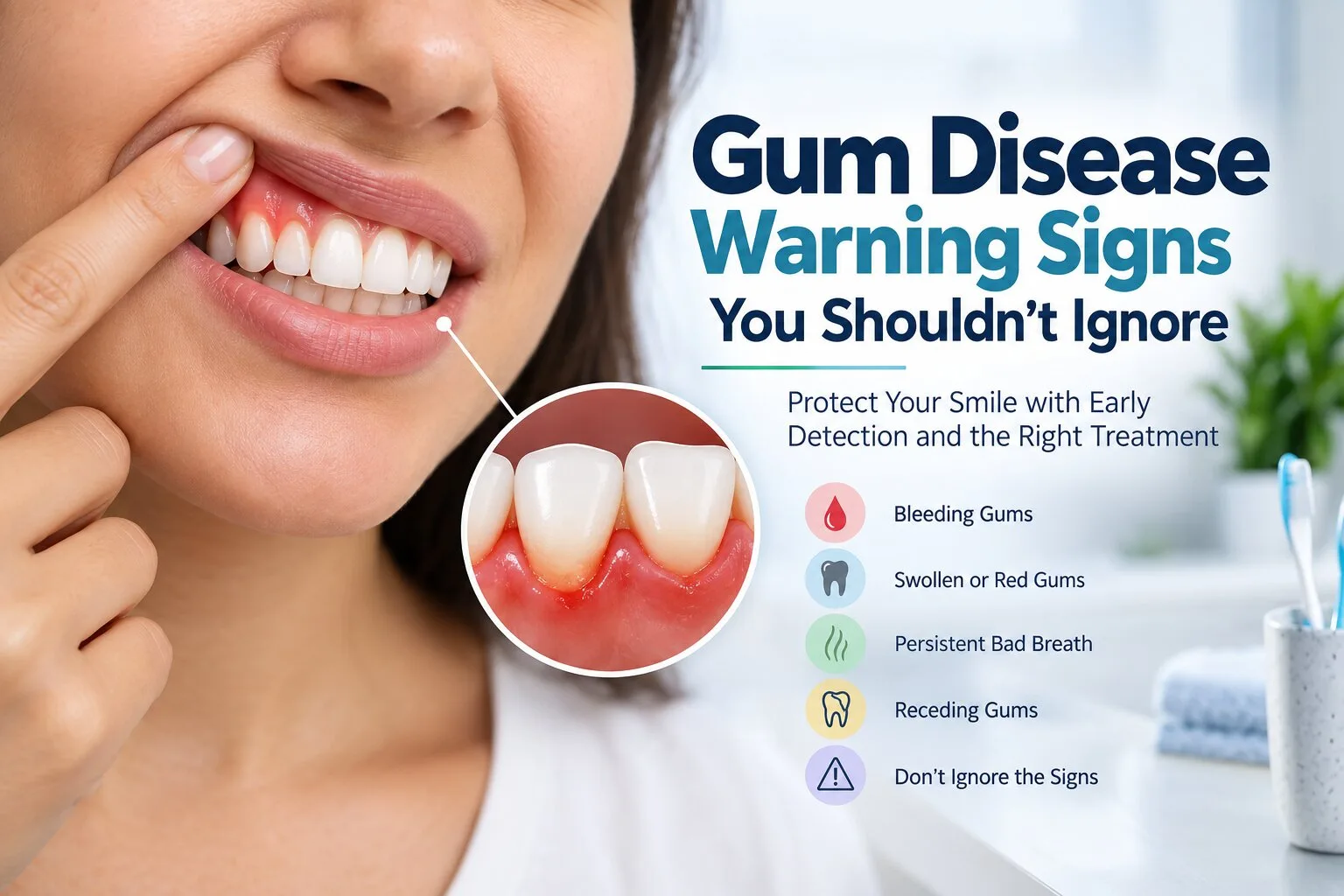
Gum
disease is one of the most common oral health concerns affecting the tissues
that support your teeth. Unlike a cavity, which often announces itself with
sharp pain, early gum disease tends to be quiet. A little bleeding when you
brush, slightly puffy gums, breath that isn't quite fresh—these small signals
are easy to brush off as nothing serious.
But
that's exactly why gum disease is so often missed until it's progressed. What
starts as gingivitis, a mild and reversible inflammation of the gums, can advance
to periodontitis, a more serious condition that damages the tissue and bone
holding your teeth in place. Left unaddressed, this progression can lead to
real, lasting consequences for your smile.
If
you've noticed changes in your gums, don't wait for pain to show up before
taking action. This guide walks through the warning signs worth paying
attention to, what causes them, and what gum disease treatment typically
involves. Falls Church residents experiencing any of these symptoms should
consider speaking with a dentist sooner rather than later.
What Is Gum Disease?
Gum
disease, also called periodontal disease, refers to inflammation and infection
of the tissues surrounding your teeth. It typically begins when plaque—a sticky
film of bacteria—builds up along the gumline and isn't removed through regular
brushing and flossing.
There
are two main stages:
Gingivitis is the earliest stage,
marked by redness, swelling, and occasional bleeding of the gums. The good news
is that gingivitis is generally reversible with professional cleaning and
consistent oral hygiene at home.
Periodontitis develops when gingivitis is
left untreated. At this stage, the infection moves beneath the gumline,
damaging the connective tissue and bone that anchor your teeth. Unlike gingivitis,
periodontitis doesn't resolve on its own and requires professional management
to control.
Understanding
this distinction matters because the earlier gum disease is caught, the simpler
the treatment tends to be.
8 Gum Disease Warning Signs You Shouldn't Ignore
1. Bleeding Gums
Seeing
a little blood when you brush or floss might seem minor, but healthy gums
typically don't bleed during normal oral care. If bleeding happens regularly,
it's often one of the earliest indicators of gum inflammation and shouldn't be
dismissed as normal.
2. Red, Swollen, or Tender Gums
Gums
that look puffy, feel tender to the touch, or appear darker red than usual are
often reacting to bacterial buildup. Healthy gum tissue should be firm and pale
pink. Persistent swelling or irritation can point to gingivitis or a more
advanced periodontal issue.
3. Receding Gums
When
gum tissue pulls away from the tooth, it can make your teeth look longer than
they used to. Gum recession exposes more of the tooth's root and is commonly
associated with periodontal disease. It's a gradual change, so it often goes
unnoticed until it's fairly advanced.
4. Persistent Bad Breath
Occasional
bad breath after a garlicky meal is normal. But bad breath or a lingering
unpleasant taste that doesn't go away with regular brushing can be a sign that
bacteria are accumulating below the gumline, a hallmark of gum disease.
5. Loose or Separating Teeth
Teeth
that feel loose or seem to be shifting position are a sign that shouldn't wait
for your next scheduled cleaning. Advanced periodontal disease can weaken the
bone and ligaments holding teeth in place, so any noticeable mobility warrants
prompt professional evaluation.
6. Pus Around the Gums
Pus
forming between the teeth and gums is a clear sign of active infection. This
symptom should never be managed at home. It calls for a dental evaluation to
determine the extent of the infection and the appropriate treatment path.
7. Pain or Difficulty While Chewing
Discomfort
or pain while chewing can indicate that gum disease has progressed enough to
affect the stability of your teeth. It's worth noting, though, that gum disease
doesn't always cause pain. The absence of discomfort doesn't necessarily mean
your gums are healthy, which is part of why routine checkups matter even when
nothing feels wrong.
8. Changes in Your Bite
If
your teeth suddenly feel like they fit together differently when you bite down,
this shift can be linked to underlying periodontal changes affecting the
structures that support your teeth.
What Causes or Increases the Risk of Gum Disease?
Several
factors can raise your risk of developing gum disease symptoms, including:
·
Inadequate plaque removal from brushing or
flossing
·
Smoking or tobacco use
·
Diabetes
·
Genetics or family history of periodontal
disease
·
Certain medications that affect saliva
production or gum tissue
·
Hormonal changes, such as those during pregnancy
·
Poor oral hygiene habits
·
Irregular dental visits
Tobacco
use deserves particular attention here. It's one of the most significant risk
factors for gum infection, and it also interferes with healing, which can make
gum disease treatment less effective and recovery slower. If you smoke or use
tobacco products, addressing that habit can play a meaningful role in gum
disease prevention.
What Happens If Gum Disease Is Left Untreated?
Without
intervention, gum disease tends to follow a predictable and troubling path:
plaque buildup leads to gum inflammation, which can develop into gingivitis,
and if still untreated, progress to periodontitis. At that stage, the infection
can destroy the tissue and bone supporting your teeth, potentially leading to
tooth loss.
While
early evaluation can't guarantee a specific outcome, it does give you and your
dentist the chance to identify problems while they're still manageable, before
more extensive treatment becomes necessary.
What Does Gum Disease Treatment Involve?
Treatment
depends on how advanced the disease is. Options may include:
·
Professional dental cleaning to remove plaque
and tartar
·
Guidance on improved brushing and interdental
cleaning techniques
·
Scaling and root planing, a deep cleaning
procedure for appropriate periodontal cases
·
Periodontal maintenance visits to monitor and
manage ongoing gum health
·
Additional periodontal treatment when the
condition requires it
According
to the American Dental Association, treatment is tailored to the individual's
condition and may be nonsurgical or surgical. Scaling and root planing is
considered a standard nonsurgical approach for treating periodontitis.
If
you're noticing any of the warning signs above, a dental evaluation can help
determine whether you need gum disease treatment in Falls Church and what type
of care fits your specific situation.
How to Protect Your Gums Between Dental Visits
Good
daily habits go a long way toward keeping gum disease at bay:
·
Brush twice daily with fluoride toothpaste
·
Clean between your teeth every day with floss or
an interdental brush
·
Don't ignore recurring gum bleeding or swelling
·
Avoid tobacco products
·
Keep up with regular dental exams and
professional cleanings
·
Tell your dentist about medical conditions, like
diabetes, that can affect your oral health
The
CDC identifies consistent oral hygiene, self-care, and regular professional
dental visits as key components of preventing and managing gum disease.
About NOVA Dental Studio
NOVA
Dental Studio provides general and cosmetic dental care for patients of all
ages in Falls Church, Virginia. The practice emphasizes detailed,
patient-focused care and offers services including general dentistry, dental
implants, root canal therapy, crowns and bridges, veneers, and teeth whitening.
Led by Michael J. Paesani, DMD, the team includes registered dental hygienists
and other dental professionals dedicated to helping patients maintain healthy
smiles. Patients noticing possible signs of gum disease can schedule an
evaluation to discuss their symptoms and appropriate treatment options.
Don't Wait to Address Gum Disease Symptoms
Bleeding,
swelling, receding gums, persistent bad breath, loose teeth, pus, and changes
in your bite are all signs worth taking seriously. None of them should be
brushed aside as minor annoyances. Early evaluation gives you the best
opportunity to catch gum problems before they progress into something more
difficult to treat.
Concerned
about bleeding, swollen, or receding gums? Schedule a dental evaluation with
NOVA Dental Studio in Falls Church to discuss your symptoms and learn whether
gum disease treatment may be appropriate for you.
Frequently Asked Questions
What are the first signs of
gum disease?
The earliest signs typically include bleeding gums during brushing or flossing,
redness or swelling, and persistent bad breath. These symptoms often appear
before any pain develops, which is why they're easy to overlook.
Can gum disease go away on
its own?
Gingivitis, the early stage of gum disease, can often be reversed with
professional cleaning and consistent oral hygiene. Periodontitis, the more
advanced stage, does not resolve on its own and requires professional
treatment.
When should I see a dentist
for bleeding gums?
If your gums bleed regularly during brushing or flossing, rather than as an
isolated incident, it's a good idea to schedule a dental evaluation. Ongoing
bleeding is often one of the first signs of gum inflammation.
What is the treatment for
gum disease?
Treatment varies based on severity and may include professional cleaning,
improved home care techniques, scaling and root planing, or ongoing periodontal
maintenance. A dentist can determine the right approach after an evaluation.
Can gum disease cause loose teeth?
Yes. Advanced periodontal disease can damage the bone and tissue that support
your teeth, which may cause them to feel loose or shift position. This symptom
should be evaluated by a dentist promptly.