Dentures vs. Dental Implants: Comparing Your Options in Falls Church
Missing
teeth affect more than just your smile. They can make chewing difficult, alter
your speech, change the shape of your face over time, and chip away at your
confidence in everyday situations. If you're dealing with tooth loss, you've
likely come across two common solutions: dentures and dental implants.
Both
options are widely used to restore function and appearance, but they work in
very different ways. The right choice depends on your oral health, personal
goals, treatment needs, and budget. There's no single answer that fits
everyone.
This
guide breaks down how dentures and dental implants compare, so you can have an
informed conversation with your dentist about dentures in Falls Church and
other tooth-replacement options available to you.
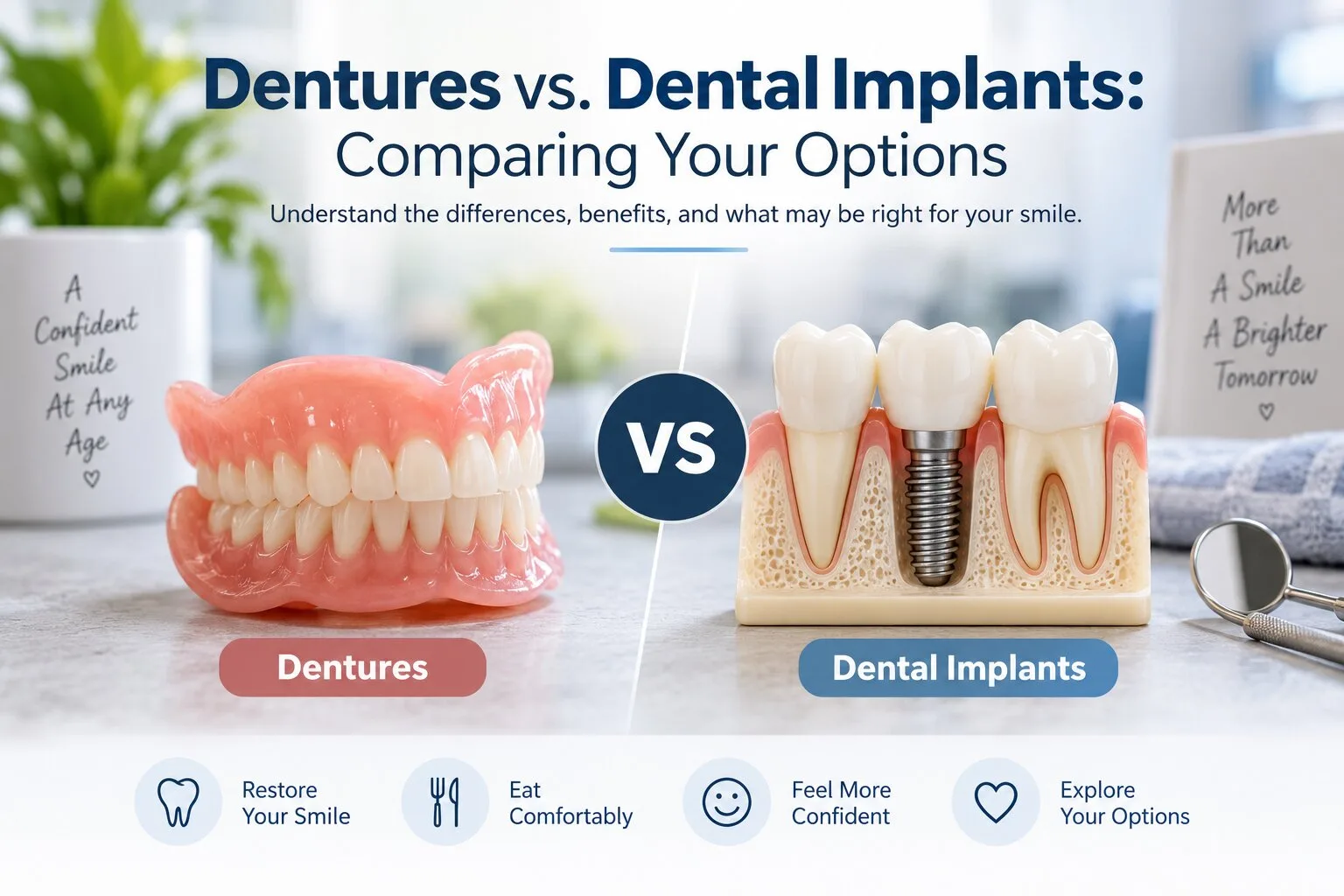
What Are Dentures?
Dentures
are removable dental prosthetics designed to replace missing teeth. They're
custom-made to fit your mouth and can restore both the appearance and function
of your smile.
Types of Dentures
·
Full/complete
dentures: Used when all teeth in an arch are missing.
·
Partial
dentures: Used when some natural teeth remain and can support the
appliance.
·
Implant-supported
dentures: A denture stabilized by dental implants for added retention.
Each
type may be considered depending on how many teeth are missing and the
condition of your remaining teeth and gums.
Benefits of Dentures
·
Can replace multiple missing teeth at once
·
Removable and relatively straightforward to
maintain
·
Can help restore chewing and speaking function
·
May be a suitable option for patients who aren't
candidates for implants
·
Can replace an entire arch of teeth
According
to the American Dental Association (ADA), dentures can be complete or partial,
and implant-retained dentures are another option worth discussing with your
dentist.
What Are Dental Implants?
Dental
implants are a tooth-replacement option designed to mimic the structure of a
natural tooth, from the root up.
How Dental Implants Work
The
process typically involves three stages:
1. An
implant post is placed into the jawbone.
2. A
healing and integration period allows the post to fuse with the bone.
3. An
abutment and a dental crown, bridge, or prosthesis are attached to complete the
restoration.
NOVA
Dental Studio lists dental implants among its services and describes them as a
way to replace missing teeth with a stable foundation for a variety of
restorations.
Potential Benefits of Dental Implants
·
Fixed rather than removable
·
Can provide stability when eating and speaking
·
Can be used to replace a single tooth or
multiple teeth
·
Designed to resemble and function like natural
teeth
·
May help preserve jawbone structure after tooth
loss
Implants
aren't automatically the right fit for everyone. Candidacy depends on a full
dental evaluation, including an assessment of your jawbone and gum health.
Dentures vs. Dental Implants: Key Differences
Here's
a general comparison of how the two options stack up:
|
Factor |
Dentures |
Dental
Implants |
|
Removable |
Yes |
Generally
no |
|
Stability |
Can
vary depending on fit |
Typically
highly stable |
|
Treatment
process |
Usually
less invasive |
Requires
surgical placement |
|
Initial
investment |
Often
lower |
Often
higher |
|
Maintenance |
Requires
daily denture care |
Requires
regular oral hygiene |
|
Bone
requirements |
May
not require the same bone support as implants |
Adequate
bone and healthy tissues may be necessary |
|
Replacement
options |
Full
or partial |
Can
support crowns, bridges, or implant-supported dentures |
|
Suitability |
Depends
on individual needs |
Depends
on health, bone, and treatment factors |
This
table offers a general overview, not a treatment recommendation. Your dentist
can help determine which factors matter most for your specific situation.
Which Is More Affordable: Dentures or Dental Implants?
Treatment
costs vary significantly from patient to patient. Several factors influence the
total price, including:
·
The number of teeth being replaced
·
The type of denture selected
·
The number of implants needed
·
Any preparatory procedures, such as bone
grafting
·
The materials used
·
Insurance coverage and available financing
It's
also worth thinking beyond the upfront cost. Dentures often come with a lower
initial investment, while implants may involve a higher starting cost but
different long-term maintenance needs. Rather than relying on general pricing
you find online, request a personalized treatment estimate based on your
specific case.
Which Option Is More Comfortable?
Dentures
New
dentures usually require an adjustment period as your mouth gets used to them.
Proper fit matters a great deal here. Ill-fitting dentures can cause
irritation, sores, or discomfort, and may need adjustments, relining, or
eventual replacement.
Dental Implants
Implant
treatment involves a healing period following surgical placement. Once healed
and restored, implants can offer a stable, secure foundation. That said,
individual experiences vary based on the specific procedure performed and your
overall oral health.
How Long Do Dentures and Dental Implants Last?
Dentures
Over
time, changes in your gums and jawbone can affect how well dentures fit. Dentures
should be professionally evaluated any time they become uncomfortable, damaged,
unstable, or no longer fit properly. The ADA identifies several circumstances
that may indicate it's time for a denture replacement or adjustment.
Dental Implants
Implants
are designed as a long-term tooth-replacement solution. The implant itself,
along with the attached crown, bridge, or prosthesis, each carries its own
maintenance and longevity considerations. Regular dental checkups remain
important for keeping an eye on the health of the implant and surrounding
tissue.
Who May Be a Candidate for Dentures?
Your
dentist will typically consider several factors, including:
·
The number of missing teeth
·
Whether an entire arch or only a few teeth need
replacement
·
Gum and oral health
·
Jawbone condition
·
Medical and dental history
·
Budget and personal preferences
·
Your ability to maintain a removable appliance
Who May Be a Candidate for Dental Implants?
Implant
candidacy depends on factors such as:
·
Adequate jawbone support
·
Healthy gums and oral tissues
·
Overall health and healing considerations
·
Ability to maintain good oral hygiene
·
The number and location of missing teeth
·
Personal expectations and treatment goals
Only
a dental examination and appropriate diagnostic evaluation can confirm whether
implants are right for you.
Can You Get Both Dentures and Dental Implants?
Yes;
this is where implant-supported dentures come in. A removable denture can be
stabilized using dental implants, combining certain characteristics of
traditional dentures with the added support of implants.
This
differs from having an individual implant-supported crown for every missing
tooth. The ADA specifically recognizes implant-retained dentures as a distinct
type of denture treatment. Whether this approach is right for you depends on
your individual anatomy and dental needs.
How to Choose Between Dentures and Dental Implants in Falls Church
Bringing
these questions to your dentist can help guide the conversation:
·
How many teeth need to be replaced?
·
Do I need a full or partial restoration?
·
Is my jawbone suitable for implants?
·
What will the treatment process involve?
·
What will my estimated total cost be?
·
How much maintenance will each option require?
·
Which option fits my lifestyle and expectations?
·
Are implant-supported dentures an option for me?
A
comprehensive dental examination should always come before deciding on a
treatment path. The ADA recommends discussing available treatment options and alternatives
with your dentist based on your specific diagnosis and needs.
Caring for Your New Smile
For Denture Wearers
·
Clean dentures daily.
·
Remove them as directed by your dentist.
·
Store dentures appropriately when not in use.
·
Keep your gums, tongue, and any remaining
natural teeth clean.
·
Schedule regular dental examinations.
The
ADA recommends daily denture cleaning and storing dentures in water or an
appropriate denture-cleaning solution when not being worn. Avoid hot or boiling
water, as it can warp dentures.
For Implant Patients
·
Brush and clean between teeth as recommended.
·
Maintain healthy gums.
·
Attend regular dental checkups.
·
Follow your dentist's post-treatment
instructions closely.
Why Choose NOVA Dental Studio for Tooth Replacement in Falls Church?
At
NOVA Dental Studio, Dr. Michael J. Paesani, DMD, and the team provide
personalized dental care for patients with a wide range of oral health needs.
Located in Falls Church, Virginia, the practice offers general and cosmetic
dentistry alongside dental implant services, all with a patient-focused,
detail-oriented approach.
Every
treatment plan is tailored to the individual, delivered in a comfortable
environment where your questions and concerns are taken seriously. If you're
weighing your tooth-replacement options, schedule a consultation to discuss
what might work best for you.
Find the Right Tooth-Replacement Option for You
Dentures
and dental implants each offer distinct advantages, and neither is universally
"better." Dentures tend to be less invasive and more budget-friendly
upfront, while implants offer a fixed, stable alternative designed to function
like natural teeth. Your ideal choice depends on your oral health, budget, and
personal goals.
If
you're exploring dentures in Falls Church or want to learn more about dental
implants, the best next step is a professional evaluation. Schedule a
consultation with NOVA Dental Studio in Falls Church to discuss dentures,
dental implants, and other tooth-replacement options.
FAQs
Are dentures or dental
implants better?
Neither option is universally better. Dentures may suit patients looking for a
less invasive, more budget-friendly solution, while implants may suit those
seeking a fixed, long-term restoration. The right choice depends on your oral
health, budget, and goals.
How much do dentures cost in
Falls Church?
Denture costs vary based on the type of denture, number of teeth being
replaced, materials used, and insurance coverage. Requesting a personalized
estimate from your dentist is the most accurate way to understand your costs.
Can dentures look natural?
Modern dentures are custom-made to fit your mouth and are designed to resemble
natural teeth and gums, helping restore a natural-looking smile.
Are dental implants
permanent?
Dental implants are designed as a long-term tooth-replacement solution.
However, the crown, bridge, or prosthesis attached to the implant may require
maintenance or replacement over time.
Yes. Partial dentures are designed for patients who still have some natural teeth remaining and need to replace only a few missing teeth.