Dental Bonding: A Quick Fix for Chips and Gaps
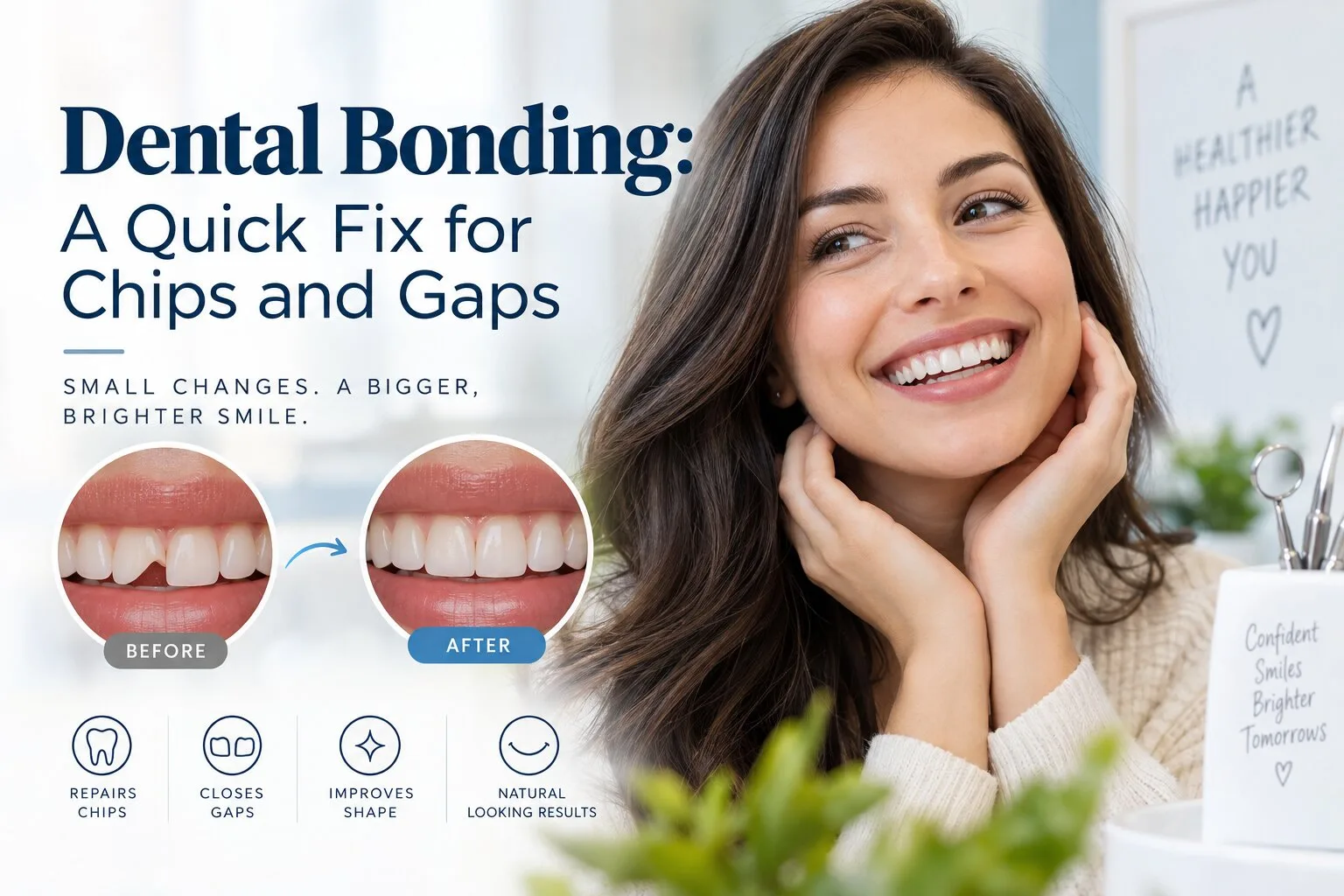
A
small chip, a slight gap between your front teeth, an edge that doesn't
sit quite right — these imperfections can feel more noticeable to you than
anyone else, but they're often enough to make you hesitate before smiling in
photos. The good news is that not every cosmetic concern calls for veneers,
crowns, or months of orthodontic treatment.
Dental
bonding is a minimally invasive cosmetic option that can improve the appearance
of chipped, gapped, or uneven teeth, often in a single visit. If you're exploring
dental bonding in Falls Church, it's worth understanding what the treatment
involves, what it can (and can't) fix, and how it compares to other cosmetic
options. Of course, an in-person evaluation is essential to determine whether
bonding is the right fit for your specific tooth and overall oral health.
What Is Dental Bonding?
Dental
bonding, sometimes called cosmetic dental bonding or composite bonding, is a
cosmetic dental treatment that uses a tooth-colored composite resin to repair
or reshape teeth. During a dental bonding treatment, your dentist applies the
resin directly to the tooth and carefully shapes it to correct the
imperfection, whether that's a chip, a gap, or an oddly shaped edge.
Once
the material is shaped to achieve the desired look, the dentist hardens it
using a special curing light and polishes it to blend naturally with your
surrounding teeth. Compared with more extensive cosmetic procedures, tooth
bonding can often be completed relatively quickly. It may also require little
to no removal of healthy tooth structure, depending on your specific case,
making it a fairly conservative option for minor corrections.
What Can Dental Bonding Fix?
Dental
bonding is versatile, but it's best suited to smaller, more targeted concerns
rather than significant dental issues.
Fixing Chipped Teeth
Bonding
can rebuild small areas of a chipped tooth, restoring its original shape and
helping it look more symmetrical alongside neighboring teeth.
Closing Small Gaps
Composite
material can be applied to reduce the appearance of certain minor spaces
between teeth. That said, larger or structurally significant gaps may require orthodontic treatment or an entirely different approach.
Improving Tooth Shape
If
a tooth appears short, uneven, or irregularly shaped, bonding can help reshape
it for a more balanced look.
Addressing Minor Discoloration
Bonding
may help mask certain types of localized discoloration. For more generalized
staining across multiple teeth, professional whitening is often the more
appropriate solution.
Improving Smile Symmetry
Small
adjustments to individual tooth contours can add up to a more balanced,
cohesive smile overall.
Benefits of Dental Bonding
Dental
bonding offers several potential advantages for patients seeking a conservative
cosmetic solution:
·
Minimally
invasive: Bonding often preserves much of your natural tooth structure.
·
Efficient
treatment: Many cases can be completed in a single office visit.
·
Natural
appearance: Composite resin can be color-matched to blend seamlessly with
surrounding teeth.
·
Versatile:
Bonding can address several minor cosmetic concerns at once.
·
Potentially
more affordable: It may cost less than more extensive cosmetic
restorations.
·
Convenient:
A good option for patients looking for a relatively quick cosmetic improvement.
Keep
in mind that exact treatment time, cost, and longevity vary depending on your
individual case, so it's best to discuss specifics with your dentist.
What to Expect During Dental Bonding in Falls Church
While
the process can vary depending on the tooth and your specific needs, dental
bonding treatment generally follows these steps:
Step 1: Consultation. Your dentist examines the
tooth and discusses your cosmetic goals.
Step 2: Tooth Preparation. The tooth is prepared so
the composite resin can adhere properly.
Step 3: Shade Selection. Your dentist selects a
composite shade that closely matches your surrounding teeth.
Step 4: Application and
Shaping.
The resin is applied and carefully shaped to achieve the desired appearance.
Step 5: Curing. A special dental light
hardens the bonding material.
Step 6: Final Adjustments
and Polishing.
The bonded tooth is refined and polished for a smooth, natural-looking finish.
Dental Bonding vs. Veneers: What's the Difference?
Bonding
and veneers both address cosmetic concerns, but they work differently and suit
different situations.
|
Feature |
Dental
Bonding |
Veneers |
|
Material |
Composite
resin |
Usually
porcelain or composite |
|
Typical
use |
Minor
cosmetic corrections |
Broader
cosmetic changes |
|
Tooth
preparation |
Often
minimal |
May
require enamel preparation |
|
Treatment
time |
Often
shorter |
Usually
requires more planning |
|
Reversibility |
Often
more conservative |
Porcelain
veneers are generally irreversible |
|
Best
suited for |
Small
chips, gaps, shape issues |
More
extensive cosmetic transformations |
Neither
option is universally "better." The right choice depends on your
dental health, cosmetic goals, bite, and the current condition of your teeth —
which is exactly why a professional evaluation matters before deciding on a
treatment path.
How Long Does Dental Bonding Last?
Several
factors influence how long dental bonding holds up over time, including:
·
Oral hygiene habits
·
Eating habits
·
Biting hard objects
·
Teeth grinding
·
The location of the bonded tooth
·
Regular dental checkups
Composite
bonding can eventually wear, stain, chip, or need repair, particularly on teeth
exposed to significant biting forces. Rather than offering a one-size-fits-all
timeline, it's best to ask your dentist how long your specific bonding is
likely to last based on your habits and oral health.
Is Dental Bonding Right for You?
Dental
bonding may be worth discussing with your dentist if you have:
·
A small chipped tooth
·
Minor gaps between teeth
·
Uneven tooth edges
·
Minor cosmetic imperfections
·
A preference for a conservative, less invasive
cosmetic treatment
On
the other hand, other treatments may be more appropriate if you're dealing with
extensive tooth damage, significant decay, large gaps, major alignment
problems, or severe discoloration. Your dentist should evaluate your underlying
oral health first, before recommending any cosmetic treatment.
Why Choose NOVA Dental Studio for Cosmetic Dentistry in Falls Church?
NOVA
Dental Studio, located at 200 Little Falls St #101, Falls Church, VA 22046, is
led by Michael J. Paesani, DMD, and provides general and cosmetic dentistry for
patients of all ages. The practice offers a range of cosmetic services,
including veneers, teeth whitening, Invisalign, and full smile makeovers,
alongside dental bonding.
NOVA
Dental Studio emphasizes personalized, detail-oriented care, taking the time to
understand each patient's cosmetic goals and oral health before recommending a
treatment plan. If you're curious whether bonding is right for your smile,
scheduling a consultation is the best place to start.
A Small Fix Can Make a Big Difference
A
chipped tooth or a small gap doesn't necessarily call for extensive cosmetic
dentistry. In many cases, dental bonding offers a conservative, efficient way
to address these minor imperfections and help you feel more confident in your
smile. Still, the right treatment always depends on your individual dental
condition and cosmetic goals.
Considering
dental bonding in Falls Church? Schedule a consultation with NOVA Dental Studio
to discuss your smile goals and find out whether cosmetic bonding is
appropriate for you.
FAQs
Is dental bonding good for
chipped teeth?
Yes, bonding is commonly used to repair small chips by rebuilding the missing
portion of the tooth with composite resin, restoring its shape and appearance.
Can dental bonding close
gaps between teeth?
Bonding can reduce the appearance of certain small gaps between teeth. Larger
or more structurally significant gaps may require orthodontic treatment
instead.
Is dental bonding painful?
Bonding is generally well-tolerated and often doesn't require anesthesia, since
it typically involves minimal to no removal of tooth structure. Your dentist
can walk you through what to expect for your specific case.
How long does dental bonding
take?
Many bonding procedures can be completed in a single office visit, though the
exact time depends on the number of teeth being treated and the complexity of
the correction.
Does dental bonding look natural?
Yes, composite resin is color-matched to your surrounding teeth and shaped to
blend seamlessly, giving bonded teeth a natural appearance.