Wisdom Teeth Removal: When Is It Necessary?
Most
people's wisdom teeth show up uninvited sometime between the late teenage years
and their mid-twenties. For some, these third molars settle in without causing
any trouble. For others, they become a source of pain, infection, or crowding
that a dentist needs to address.
So
how do you know which category you fall into? Wisdom teeth don't always need to
come out, but certain warning signs suggest they should. Problems tend to arise
when these molars are impacted, overcrowded, infected, or too difficult to
clean properly, and left unchecked, these issues can spread to neighboring
teeth or the surrounding gum tissue.
Wisdom
teeth removal in Falls Church is one option available to patients when these
molars start threatening oral health. If you've noticed pain, swelling, or
trouble opening your mouth fully, it's worth scheduling a dental evaluation to
find out what's going on and whether treatment is needed.
What Are Wisdom Teeth?
Wisdom
teeth are the third and final set of molars, typically emerging during the late
teenage years or early adulthood. In an ideal scenario, there's enough space in
the jaw for them to erupt normally, sitting flush alongside the rest of the
teeth without causing complications.
For
many people, though, the jaw simply isn't big enough. When this happens, wisdom
teeth can become partially or completely trapped beneath the gumline, a
condition known as impaction. Dental X-rays and a physical examination help
determine exactly where a wisdom tooth is positioned and whether it's putting pressure
on the teeth around it.
When Is Wisdom Teeth Removal Necessary?
Not
every wisdom tooth needs to go. Removal is typically recommended when these
molars cause, or are likely to cause, dental problems down the line. Here are
the most common reasons dentists suggest extraction.
Impacted Wisdom Teeth
An
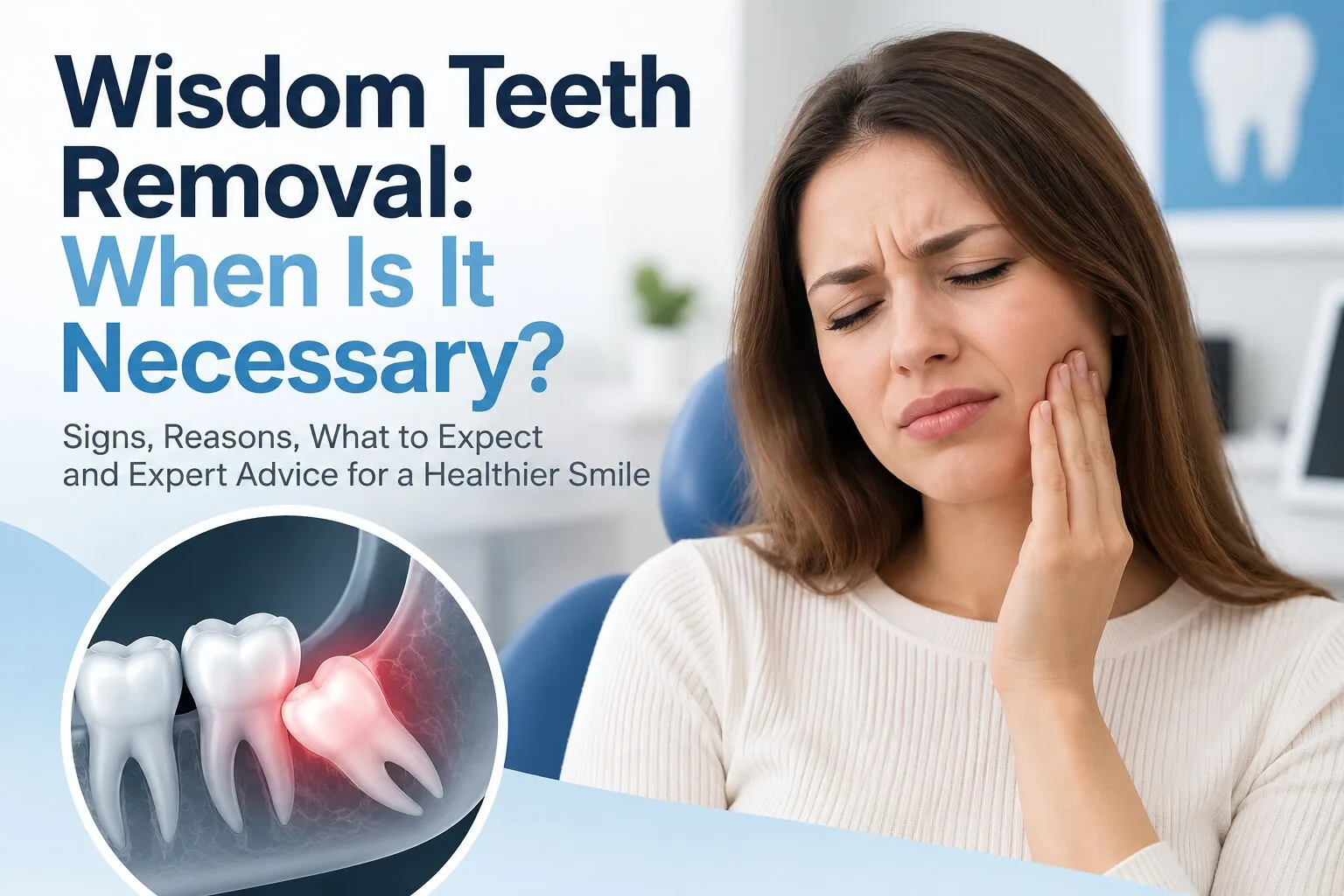
impacted wisdom tooth is unable to fully erupt through the gum. Instead of
growing in straight, it may angle sideways or emerge at an unusual position,
putting pressure on neighboring teeth and potentially disrupting their
alignment.
Repeated Pain or Discomfort
Ongoing
jaw pain, tenderness near the back molars, or discomfort while chewing can all
point to a wisdom tooth issue. This kind of recurring pain is one of the more
common reasons patients seek an evaluation in the first place.
Infection or Gum Inflammation
When
a wisdom tooth only partially erupts, it can create a small pocket where food
particles and bacteria get trapped. Over time, this can lead to swelling,
redness, tenderness, or persistent bad breath.
Tooth Decay
Because
wisdom teeth sit so far back in the mouth, they're notoriously hard to reach
with a toothbrush and floss. This makes them more prone to decay, especially
when their positioning makes proper cleaning nearly impossible.
Damage to Nearby Teeth
A
wisdom tooth that's growing at the wrong angle can push against the molar next
to it. This pressure can contribute to decay, misalignment, or other
complications in otherwise healthy teeth.
Cysts or Other Abnormal Changes
In
rarer cases, a wisdom tooth can be associated with a cyst or other abnormal
growth beneath the gum. A dentist can identify this through a clinical exam and
imaging, and determine the appropriate next steps.
Signs You May Need Wisdom Teeth Removal
Not
sure if what you're feeling warrants a dental visit? Watch for these common
symptoms:
·
Pain or pressure at the back of the mouth
·
Swollen or tender gums
·
Redness around a wisdom tooth
·
Difficulty opening the mouth
·
Pain while chewing
·
Persistent bad breath or unpleasant taste
·
Food repeatedly getting trapped around the tooth
·
Recurrent gum infections
·
Jaw discomfort
·
Damage or crowding involving nearby teeth
Keep
in mind that experiencing one or more of these symptoms doesn't automatically
mean extraction is the answer. A dental examination is the only reliable way to
pinpoint the cause and determine the right course of action.
What Happens During a Wisdom Teeth Evaluation?
A
wisdom teeth evaluation typically starts with a conversation about your
symptoms and dental history. From there, your dentist will examine your teeth
and gums directly, and may take X-rays or other imaging to get a clearer
picture of how your wisdom teeth are positioned.
This
process allows your dentist to assess the surrounding teeth and bone structure,
and to discuss treatment options that make sense for your specific situation.
It's worth noting that the decision to remove a wisdom tooth should be based on
your individual dental condition, not simply your age.
What to Expect From Wisdom Teeth Removal
If
removal is recommended, your dentist will likely use local anesthesia or
another appropriate form of anesthesia, depending on the complexity of the
extraction and your comfort needs. From there, the tooth is carefully accessed
and removed. More complex cases, particularly those involving impacted teeth,
may require additional steps to complete the extraction safely.
Once
the procedure is finished, you'll receive specific instructions for caring for
the extraction site. Recovery timelines can vary quite a bit from patient to
patient, depending on the complexity of the extraction and your body's
individual healing process.
Wisdom Teeth Removal Aftercare Tips
Proper
aftercare plays a big role in how smoothly your recovery goes. General guidance
includes:
·
Follow your dentist's specific post-extraction
instructions
·
Keep the extraction area clean as directed
·
Stick to appropriate soft foods during the
initial recovery period
·
Avoid activities that could disturb the
extraction site
·
Take medications only as directed by your
dentist
If
you experience significant swelling, uncontrolled bleeding, fever, worsening
pain, or any other concerning symptoms, contact your dental office promptly
rather than waiting it out.
Why Choose NOVA Dental Studio for Wisdom Teeth Care in Falls Church?
NOVA
Dental Studio, led by Michael J. Paesani, DMD, provides general and cosmetic
dental care to patients throughout Falls Church, Virginia. The practice takes a
detail-oriented approach to care for patients of all ages, offering a range of
dental services, including in-office treatment for wisdom teeth concerns.
Conveniently
located at 200 Little Falls St #101, Falls Church, VA 22046, NOVA Dental Studio
makes it easy for local patients to get the evaluation and treatment they need.
If
you're experiencing wisdom tooth pain, swelling, or other concerns, contact
NOVA Dental Studio to schedule an evaluation and discuss whether wisdom teeth
removal is right for you.
FAQs
At what age do wisdom teeth
usually come in?
Wisdom teeth typically emerge sometime between the late teenage years and the
early twenties, though the exact timing varies from person to person.
Does everyone need wisdom
teeth removal?
No. Some people have enough room in their jaw for wisdom teeth to erupt
normally and function without causing any problems. Removal is only recommended
when these teeth cause or are likely to cause dental issues.
What are impacted wisdom
teeth?
Impacted wisdom teeth are teeth that can't fully erupt through the gum, often
because there isn't enough space in the jaw. They may grow sideways, at an
angle, or remain partially or fully trapped beneath the gumline.
Is wisdom teeth removal
painful?
Discomfort levels vary by patient and by the complexity of the extraction. Your
dentist will discuss anesthesia options and aftercare guidance to help manage
your comfort throughout the process.
How do I know if my wisdom
tooth is infected?
Common signs of infection include swelling, redness, tenderness, and persistent
bad breath. A dental evaluation is the best way to confirm whether infection is
present and determine the appropriate treatment.
Don't Ignore Wisdom Tooth Problems
Wisdom
teeth don't automatically require extraction, but impacted, infected, decayed,
or otherwise problematic wisdom teeth often do need attention. Ignoring
recurring pain or swelling can allow these issues to worsen over time,
potentially affecting neighboring teeth as well.
If you're experiencing wisdom tooth discomfort or wondering whether extraction is necessary, contact NOVA Dental Studio to schedule an evaluation for wisdom teeth removal in Falls Church.