
Veneers for Chipped Teeth in Falls Church: A Smile Fix
Admin · February 8, 2026
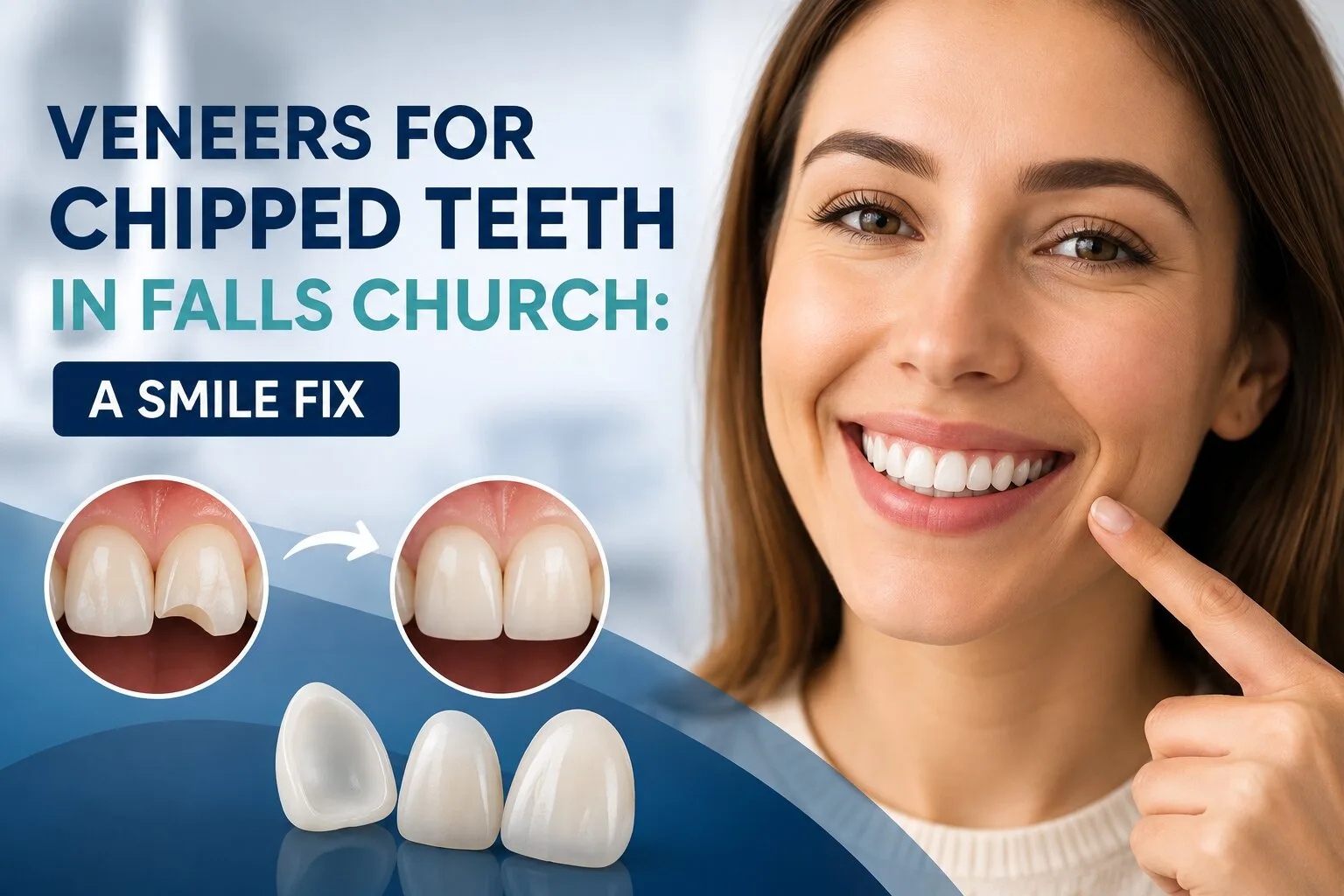
A chipped tooth might seem minor, but when it's one of your front teeth, it can feel like it's all anyone notices. That small crack or broken edge can shift how you feel about smiling in photos, talking with colleagues, or meeting someone new. The good news is that cosmetic dentistry has evolved significantly, and patients no longer have to live with the aesthetic impact of a chip. For residents exploring veneers for chipped teeth in Falls Church and the surrounding Northern Virginia communities, veneers are one of several options worth understanding before making a decision.
What Are Veneers for Chipped Teeth?
Dental veneers are thin, custom-made shells bonded to the front surface of a tooth. They're designed to improve the appearance of teeth that are chipped, worn, stained, or uneven—without replacing the entire tooth structure.
Two main types are available: porcelain veneers and composite veneers. Porcelain veneers are fabricated in a dental lab and tend to offer a more lifelike finish and greater stain resistance. Composite veneers are applied directly to the tooth in a single visit and can be a more accessible starting point for some patients.
It's worth noting that veneers are primarily a cosmetic solution. According to the Journal of the American Dental Association (JADA), veneers are commonly used to improve the appearance of chipped or worn teeth by covering the visible front surface. They don't rebuild severely damaged tooth structure the way other restorations do—but for cosmetic chips and surface imperfections, they can be highly effective.
Why Do Teeth Become Chipped?
Teeth are remarkably strong, but they're not indestructible. Several everyday factors can lead to chipping:
- Biting hard foods such as ice, hard candy, or crusty bread
- Sports injuries or accidental falls that cause sudden trauma
- Teeth grinding or clenching (bruxism), which wears down enamel over time
- Everyday wear that gradually weakens tooth edges
- Old dental restorations that can create weak points around the edges of a tooth
Understanding how a chip occurred matters, because the cause can influence which treatment approach makes the most sense.
How Veneers Can Improve the Appearance of Chipped Front Teeth
When a front tooth is chipped, veneers work by recreating its natural shape and symmetry. A skilled cosmetic dentist custom-designs each veneer to match the color, size, and contour of your surrounding teeth—making the restoration blend seamlessly into your smile.
The process accounts for more than just the individual tooth. Cosmetic dentists consider facial proportions, the natural curve of the gum line, and how each tooth relates to those beside it. This attention to smile design is what separates a natural-looking result from one that appears artificial.
According to the Cleveland Clinic, veneers are intended to camouflage cosmetic imperfections such as chips, cracks, discoloration, and minor shape irregularities while blending with surrounding teeth. The result, when done well, is a more balanced and harmonious smile.
That said, candidacy depends on the condition of the tooth and your overall oral health. A professional evaluation is always the necessary first step.
Are Veneers the Right Choice for Every Chipped Tooth?
Not every chipped tooth is a good candidate for veneers, and a reputable cosmetic dentist will tell you exactly that.
Minor cosmetic chips on otherwise healthy teeth are often well-suited for veneers. But when the damage extends deeper—affecting a significant portion of tooth structure—other restorative treatments may be more appropriate. The Cleveland Clinic notes that significant decay, gum disease, or extensive structural damage should be addressed before veneers are ever considered.
Bite alignment and enamel condition also factor into treatment planning. Patients with active grinding habits, insufficient enamel, or misalignment may need to explore additional steps before veneers become viable.
This is why a thorough professional evaluation matters. There's no universal right answer—only the right answer for your specific teeth, bite, and goals.
Veneers vs. Dental Bonding vs. Crowns for Chipped Teeth
Three treatments commonly come up in conversations about chipped teeth. Here's how they differ:
Dental Bonding
Bonding uses a tooth-colored composite resin applied directly to the tooth. It's a conservative cosmetic option well-suited for smaller chips and typically completed in a single appointment. It's also reversible, which makes it a lower-commitment starting point for some patients.
Porcelain Veneers
Veneers cover the front surface of a tooth and are designed for longer-term cosmetic enhancement. They're a strong option when the goal is to improve overall tooth appearance—not just patch a small area. As the Cleveland Clinic explains, veneers cover only the front surface, which distinguishes them from crowns.
Dental Crowns
Crowns encase the entire tooth and are generally recommended when substantial tooth structure has been damaged or when the tooth needs added protection and strength. They're more of a restorative solution than a cosmetic one, though they can achieve both outcomes.
The best treatment depends entirely on the extent of the chip, the health of the tooth, and your aesthetic goals. No single option is universally superior.
The Veneer Process at a Cosmetic Dentist
Getting veneers typically involves several stages, and timelines vary by case:
- Cosmetic consultation to discuss your goals and review your dental history
- Smile evaluation and treatment planning, including shade selection and design
- Tooth preparation, which for porcelain veneers involves removing a thin layer of enamel
- Custom veneer fabrication at a dental laboratory
- Final bonding and adjustments to ensure fit, comfort, and appearance
- Follow-up care recommendations for maintaining your results
Some patients require two or three visits; others may have more complex cases that take longer. Professional veneer treatment typically includes consultation, planning, custom fabrication, and bonding—with some enamel preparation often required for porcelain veneers, according to the Cleveland Clinic.
Benefits of Veneers for Chipped Teeth
For the right candidate, veneers offer meaningful cosmetic advantages:
- Natural-looking appearance that blends with surrounding teeth
- Improved smile symmetry after chipping or uneven wear
- Custom shade matching for a cohesive, harmonious result
- Enhanced confidence in personal, social, and professional settings
- Good stain resistance, particularly with porcelain veneers
- Long-lasting cosmetic improvement with proper care and maintenance
The Cleveland Clinic notes that porcelain veneers can provide a lifelike appearance and are known for their stain resistance—though they require proper care and are not considered permanent.
How Long Do Veneers Last?
Longevity varies based on material choice, oral habits, and how consistently you care for them. The Cleveland Clinic notes that veneers may last around 10–15 years with proper care, though individual outcomes vary.
To support a longer lifespan:
- Brush and floss daily
- Avoid using your teeth to open packaging or bite hard objects like ice
- Wear a night guard if you grind your teeth
- Attend regular dental visits for cleanings and checkups
Veneers aren't maintenance-free, but they reward consistent care with lasting results.
Who Is a Good Candidate for Veneers?
Suitable candidates generally share a few common factors, according to the Cleveland Clinic:
- Healthy gums with no active periodontal disease
- Good overall oral hygiene habits
- Adequate tooth enamel, depending on the type of veneer planned
- Cosmetic concerns such as chipped, uneven, or discolored teeth
- Realistic expectations about what cosmetic dentistry can and cannot achieve
Self-assessment only goes so far. A consultation with a licensed cosmetic dentist is the only reliable way to determine whether veneers are the right fit for your situation.
Caring for Veneers After Treatment
Once your veneers are placed, maintaining them is straightforward but important. The Canadian Dental Association notes that veneered teeth still require healthy surrounding tooth structure and gum tissue—meaning your daily habits matter just as much after treatment as before.
Practical care tips include:
- Brush twice daily with a non-abrasive toothpaste
- Floss every day to protect the gum tissue around each tooth
- Avoid biting ice or very hard foods
- Wear a sports guard during contact activities if recommended
- Use a dentist-approved night guard if bruxism is a concern
Why Choose a Cosmetic Dentist in Falls Church for Veneers?
Cosmetic dentistry is as much an art as a science. Choosing a skilled, licensed cosmetic dentist—one who takes the time to evaluate your individual smile—makes a significant difference in the quality of your results.
A good cosmetic dentist in Falls Church will assess your facial proportions, tooth harmony, and overall oral health before recommending veneers. They'll design a smile that looks natural, not overdone, and they'll discuss all available options with you honestly.
NOVA Dental Studio offers cosmetic dentistry services in Falls Church, including porcelain veneers as part of its smile enhancement options. Their team provides personalized evaluations to help patients determine whether veneers align with their cosmetic goals and oral health profile.
Restore the Look of Your Smile with Personalized Veneer Care
Chipped teeth don't have to define your smile. Whether your chip is small and cosmetic or more significant, modern dentistry offers several effective paths forward—and veneers may be an excellent option for the right candidate. If you're in Falls Church and exploring veneers for chipped teeth, the most important next step is a consultation with a qualified cosmetic dentist who can evaluate your specific situation and help you understand all your options.
Your smile is worth the conversation.
Frequently Asked Questions
Can veneers fix a chipped front tooth?
Yes, in many cases. Veneers can cover minor to moderate cosmetic chips on front teeth, restoring the tooth's natural shape and appearance. However, veneers are most appropriate when the chip is primarily cosmetic. Significant structural damage may require a different treatment, such as a dental crown.
Are veneers better than bonding for chipped teeth?
Neither is universally better—it depends on the size of the chip, your aesthetic goals, and your budget. Dental bonding is a conservative, single-visit option well-suited for smaller chips. Veneers offer a more durable, longer-lasting cosmetic result and are often preferred when improving the overall appearance of the tooth is the primary goal.
How long do porcelain veneers last?
According to the Cleveland Clinic, porcelain veneers may last around 10–15 years with proper care. Longevity depends on oral hygiene habits, dietary choices, and whether the patient grinds their teeth.
Do veneers look natural?
Yes, when custom-designed by a skilled cosmetic dentist. Porcelain veneers are shade-matched to your surrounding teeth and shaped to complement your facial proportions, making them difficult to distinguish from natural teeth.
Is getting veneers painful?
Most patients experience little to no discomfort during the procedure. Local anesthesia is typically used during tooth preparation, and any post-procedure sensitivity is usually mild and temporary. Your dentist can advise on what to expect based on your individual case.