
When Should You Book a Same-Day Dental Appointment? 8 Signs You Shouldn't Wait
Admin · February 8, 2026
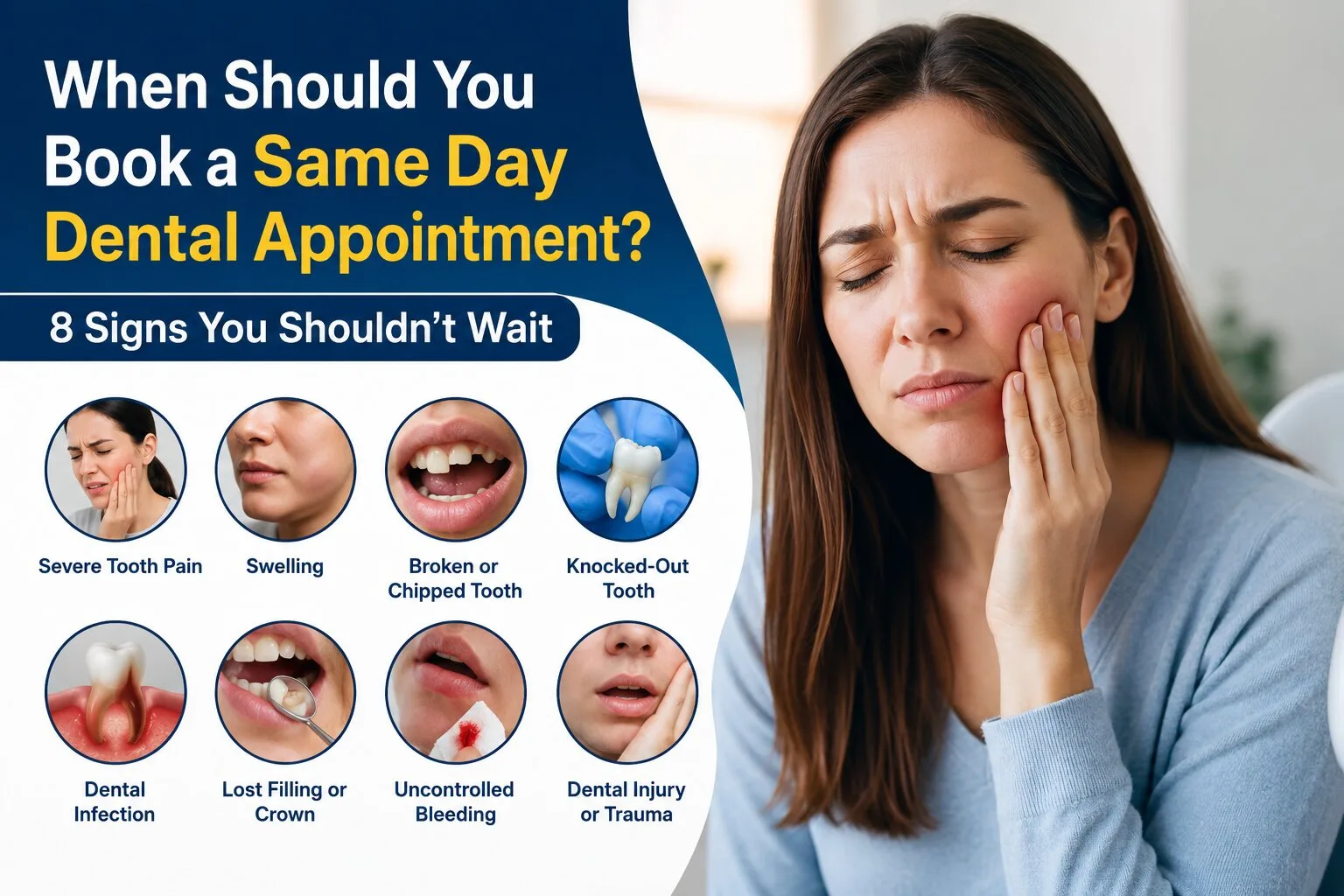
Dental problems have a way of appearing without warning. One moment you're fine; the next, you're dealing with sharp pain, unexpected swelling, or a tooth that simply isn't where it used to be. The challenge is knowing when to call your dentist right away—and when you can afford to wait for a routine visit.
Not every dental concern is an emergency, but some problems escalate quickly when left untreated. Prompt care may help control pain, address infection, and protect a damaged tooth before the situation becomes more complicated. Nova Dental Studio offers same-day emergency appointments for urgent dental concerns, evaluating each patient to determine the right level of care.
What Is a Same-Day Dental Appointment?
A same-day dental appointment is an urgent visit arranged for a dental problem that needs prompt professional evaluation—rather than something scheduled days or weeks out. Availability depends on the dental office, the nature of the concern, and how urgently treatment is needed.
Not every dental issue requires emergency treatment. A mild toothache that comes and goes may be worth monitoring briefly, while persistent pain, visible trauma, swelling, or signs of infection call for a much faster response. Below are eight signs that same-day dental appointments may be the right move.
8 Signs You Should Book a Same-Day Dental Appointment
1. You Have Severe or Persistent Tooth Pain
Intense, throbbing, or progressively worsening tooth pain is one of the clearest indicators that something needs professional attention. Pain that disrupts eating, sleeping, or daily activities is not something to push through.
It's tempting to take an over-the-counter painkiller and wait for the discomfort to pass. But temporary relief does not mean the underlying problem has resolved. Nova Dental Studio notes that untreated tooth problems—including decay and infection—can worsen even when symptoms temporarily improve.
2. Your Face, Jaw, or Gums Are Swollen
Swelling in or around the mouth can signal infection or another dental problem that requires prompt attention. If the swelling is spreading or increasing rapidly, do not wait for a routine appointment.
Severe facial swelling accompanied by difficulty breathing or swallowing is a medical emergency. In that case, go to the nearest emergency room rather than waiting for a dental visit.
3. You Have a Broken, Cracked, or Chipped Tooth
Dental trauma can expose sensitive inner tooth structures, increasing the risk of pain, infection, and further damage. A dentist can assess whether the tooth needs bonding, a filling, a crown, root canal therapy, or another form of treatment.
If possible, save any broken tooth fragment in a small container of milk or clean water. In the meantime, avoid chewing on the affected side until you've been evaluated.
4. A Tooth Has Been Knocked Out
A knocked-out permanent tooth is one of the most time-sensitive dental emergencies. The sooner you receive professional care, the better the chances of saving the tooth.
Handle the tooth by the crown—the part you normally see—and avoid touching the root. If it's dirty, rinse it gently with water without scrubbing. Keep it moist (in milk or between your cheek and gum if safe to do so) and get to a dentist immediately.
5. You Notice Signs of a Dental Infection
Dental infections don't resolve on their own. Warning signs include severe or throbbing pain, swelling, fever, pus, a bad taste in the mouth, or tenderness when biting. These symptoms may indicate an abscess—a pocket of infection that can spread if left untreated.
Treatment depends on the location and extent of the infection. In some cases, root canal therapy is required when the tooth's pulp has become infected. Antibiotics alone are rarely enough to fully address a dental abscess.
6. You Have a Lost Filling, Crown, or Other Dental Restoration
Losing a filling or crown leaves the tooth exposed and vulnerable to sensitivity, further decay, and structural damage. Contact your dentist promptly, especially if there is significant pain or a sharp edge irritating your mouth.
Temporary dental cement from a pharmacy can be used as a short-term measure, but this is not a substitute for professional treatment. The goal is to protect the tooth until you can be seen.
7. You Are Experiencing Significant Bleeding After a Dental Injury or Procedure
Some bleeding after a tooth extraction or dental procedure is normal and expected. Heavy, persistent, or difficult-to-control bleeding is not.
If you're experiencing significant bleeding after a dental injury or procedure, contact your dentist for urgent guidance. Bleeding that accompanies major facial or head trauma warrants emergency medical care rather than a dental appointment.
8. You Have Sudden Dental Pain After an Accident or Injury
Accidents involving the mouth, jaw, or face can cause damage that isn't immediately visible. A tooth may look intact while sustaining internal damage from the impact.
After any significant dental trauma, prompt evaluation is recommended—even if pain seems mild at first. Internal damage, fractures, and nerve involvement can worsen over time without obvious outward signs.
Same-Day Dental Appointment vs. Emergency Room: Where Should You Go?
Many urgent dental problems are best handled by an emergency dentist rather than a hospital. Conditions like a severe toothache, broken or chipped tooth, lost crown, dental infection, wisdom tooth complications, and most dental injuries fall within the scope of what a dental office can address. Nova Dental Studio specifically lists these among the concerns it addresses through its emergency dental service.
A hospital emergency department is more appropriate when symptoms are life-threatening—including severe facial trauma, uncontrolled bleeding, or difficulty breathing and swallowing. When in doubt, prioritize your immediate safety first.
What Happens During a Same-Day Dental Visit?
During an urgent visit, the dentist will begin by assessing your symptoms and examining the affected area. Diagnostic imaging such as X-rays may be taken to get a clearer picture of what's happening beneath the surface.
Treatment varies depending on the cause. Options may include pain relief, a filling, crown placement, tooth extraction, root canal therapy, or treatment for infection. The focus is always on identifying and addressing the root cause—not simply masking symptoms.
What to Do While Waiting for Your Appointment
While you wait to be seen, a few practical steps can help manage discomfort and prevent further damage:
Avoid chewing on the painful or injured side
Rinse gently with warm salt water if appropriate
Apply a cold compress to reduce swelling related to an injury
Follow over-the-counter pain relief directions if it is safe for you to do so
Do not place aspirin directly on the gums or tooth
Avoid attempting to repair a broken tooth or restoration yourself
Contact the dental office and describe your symptoms clearly so staff can help determine how urgently you need to be seen
Why Choose Nova Dental Studio for Urgent Dental Care in Falls Church?
Nova Dental Studio is a Falls Church dental practice providing general, cosmetic, restorative, and emergency dental services. The practice offers same-day emergency appointments for patients experiencing urgent dental concerns and encourages patients to contact the office rather than waiting for symptoms to worsen.
Services relevant to dental emergencies include root canal therapy, dental crowns, fillings, extractions, and other restorative treatments—giving patients access to a wide range of care under one roof.
Don't Wait When Your Smile Is Sending a Warning
Severe pain, facial swelling, signs of infection, traumatic injury, or damaged restorations are not concerns to put off until next week. Each of the eight warning signs covered in this post represents a situation where prompt dental evaluation can make a meaningful difference in the outcome.
If you're experiencing any of these symptoms, contact Nova Dental Studio today to ask about same-day dental appointments and determine the right next step for your situation. Waiting rarely makes dental problems easier to treat—and acting early can protect both your comfort and your long-term oral health.
Frequently Asked Questions
What qualifies for a same-day dental appointment?
Conditions that typically qualify include severe or persistent tooth pain, dental trauma, a knocked-out or broken tooth, facial swelling, signs of infection, uncontrolled bleeding, or a lost filling or crown causing significant pain. If you're unsure, call the dental office and describe your symptoms—the staff can help assess how urgently you need to be seen.
Can I get a same-day dental appointment for a toothache?
Yes, particularly if the pain is severe, persistent, or worsening. A toothache that interferes with eating, sleeping, or daily function may indicate decay, infection, or structural damage—all of which benefit from prompt evaluation. Nova Dental Studio accepts patients with urgent dental concerns including toothaches.
Is a cracked tooth a dental emergency?
It depends on the severity. A minor chip with no pain may not require same-day attention, but a significant crack—especially one causing sharp pain, sensitivity, or exposing the inner tooth—should be assessed promptly. Delaying care can increase the risk of infection and further damage.
Should I go to the emergency room for a dental infection?
For most dental infections, an emergency dentist is the better first step. A dentist can assess the tooth, treat the source of the infection, and prescribe antibiotics if needed. The emergency room is more appropriate when a dental infection causes severe facial swelling, difficulty breathing, difficulty swallowing, or other signs that the infection may be spreading.
What should I do if my tooth is knocked out?
Handle the tooth by the crown only—avoid touching the root. Rinse it gently with water if dirty, keep it moist (in milk, saline, or held between your cheek and gum), and seek dental care immediately. A knocked-out permanent tooth is a time-sensitive emergency, and the sooner you are seen, the better the chances of saving the tooth.