
Dental Crowns in Alexandria: When Do You Need a Crown and What to Expect?
Admin · September 18, 2026
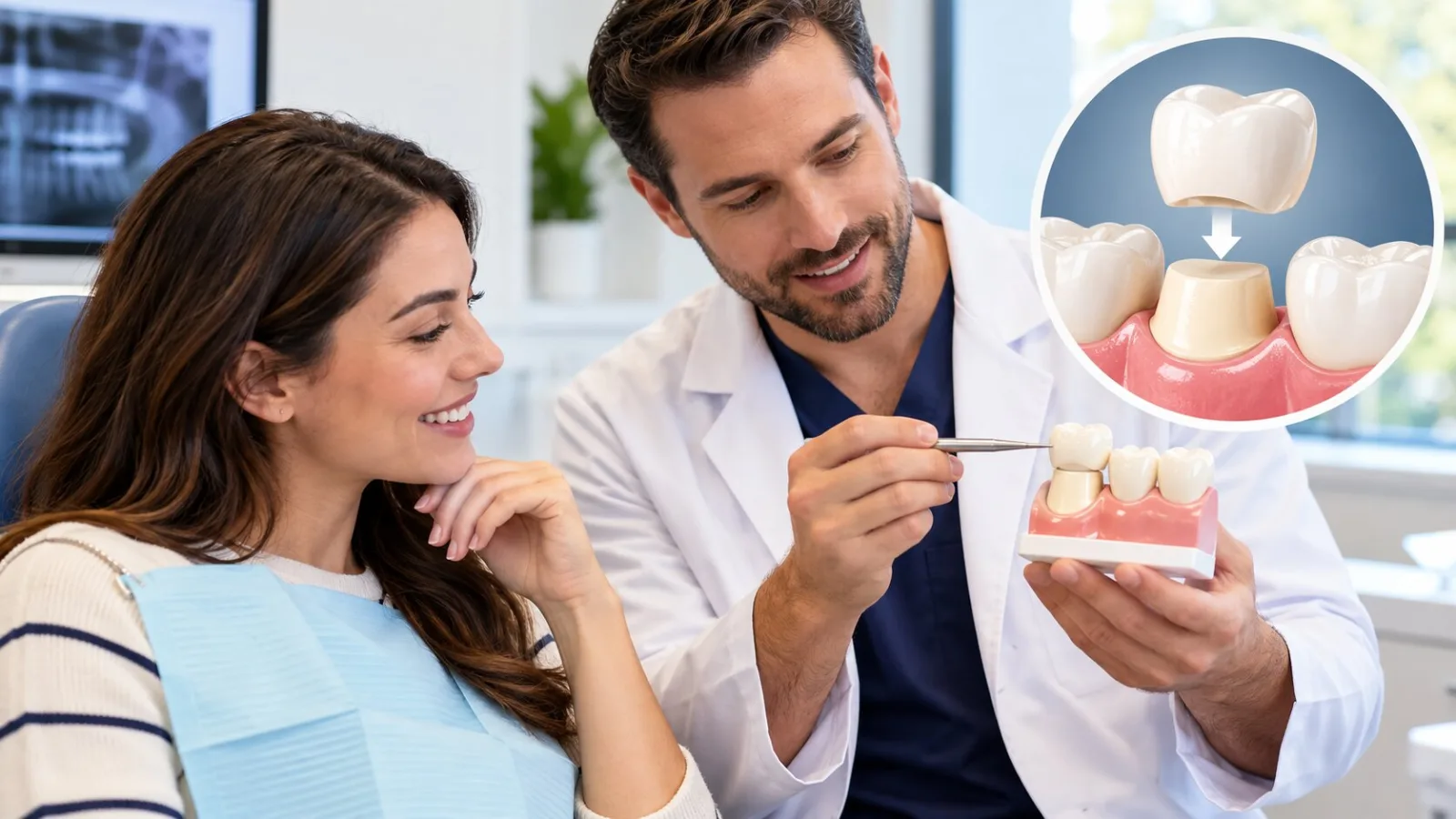
A
damaged, weakened, or heavily decayed tooth can make everyday tasks like
chewing uncomfortable and affect how confident you feel about your smile. Left
untreated, these issues often worsen over time. That's where dental crowns come
in: protective restorations designed to cover a tooth and restore its shape,
strength, and appearance. If you're exploring dental crowns in Alexandria,
understanding your options can help you feel more prepared for your dental
visit.
This
article covers when crowns are typically recommended, the materials available,
what happens during the procedure, and how to care for a crown once it's
placed.
What Is a Dental Crown?
A
dental crown is a custom-made covering that fits over the visible portion of a
tooth, restoring its function while protecting weakened tooth structure
underneath. Think of it as a protective cap that sits above the gumline, taking
on the biting and chewing forces so the remaining natural tooth doesn't have
to.
Crowns
differ from fillings in an important way. Fillings repair a smaller portion of
a tooth after decay or minor damage, while crowns cover and protect a larger
portion of the tooth's surface. Which restoration is appropriate depends on the
tooth's condition and your overall oral health, which is something your dentist
will evaluate during an exam.
When Do You Need a Dental Crown?
Dentists
recommend crowns in several common situations. Here's a closer look at when
this restoration might be the right call.
A Tooth With Extensive Decay
When
a cavity is large, there may not be enough healthy tooth structure remaining to
support a filling alone. In these cases, a crown can restore strength and
function after the damaged tissue is treated, giving the tooth the structural
support it needs to function normally again.
A Cracked, Chipped, or Broken Tooth
A
tooth that's cracked, chipped, or broken is structurally weakened and more
vulnerable to further damage. A crown can help protect it by distributing
chewing forces more evenly across the tooth. That said, sudden pain, swelling,
or a significant fracture should be evaluated by a dentist promptly rather than
waiting for a routine visit.
After Root Canal Treatment
Root
canal therapy removes infected or damaged tissue from inside a tooth, which can
leave it more brittle. Some teeth treated with root canal therapy need
additional protection, particularly when substantial tooth structure has been
lost during the procedure.
Worn or Severely Discolored Teeth
Teeth
that are significantly worn down or misshapen may benefit from a crown, which
can restore both function and appearance. For some appearance-related concerns,
though, less invasive cosmetic treatments may be a suitable alternative, so
it's worth discussing all your options with a dentist.
To Restore a Dental Implant
When
a tooth is missing entirely, a dental implant can replace the root, and a crown
forms the visible replacement tooth attached on top. Together, they're designed
to look and function like a natural tooth.
Types of Dental Crowns: Which Option Is Right for You?
Several
crown materials are available, each with its own characteristics. No single
option is right for everyone; the best choice depends on your specific
circumstances.
·
Porcelain
or ceramic crowns are often chosen for their tooth-like appearance, making
them a popular option for teeth that are visible when you smile.
·
Porcelain-fused-to-metal
crowns combine a metal base with a porcelain outer layer, blending strength
with a more natural look than metal alone.
·
Metal
crowns offer durability and can be useful for teeth that experience
substantial chewing forces, such as back molars.
·
Resin
crowns may be used in selected situations, although their durability varies
depending on the specific material used.
Tooth
location, bite forces, appearance preferences, allergies, and budget can all
influence which material makes the most sense for you. Your dentist can walk
you through the advantages and limitations of each option based on your
individual needs.
What to Expect During the Dental Crown Procedure
Knowing
what happens at each stage can make the process feel far less intimidating.
Step 1 — Dental Examination
Your
dentist examines the affected tooth and may take X-rays to assess its
condition. This helps determine the extent of decay, cracks, or other damage
and informs the treatment plan.
Step 2 — Tooth Preparation
Once
a crown is recommended, the dentist numbs the area and removes any decay or
damaged material. The tooth is then shaped to accommodate the crown, creating
the right foundation for a secure fit.
Step 3 — Impressions or Digital Scanning
Next,
the tooth is measured using either traditional impressions or a digital scan,
so the crown can be custom-made to fit precisely. While the permanent crown is
being prepared, a temporary crown may be placed to protect the tooth in the
meantime.
Step 4 — Final Crown Placement
When
the permanent crown is ready, the dentist checks it for fit, bite alignment,
and appearance before securing it in place. Some practices offer same-day
crowns using in-office technology, while others work with a dental laboratory
and require a follow-up visit. The exact number of appointments depends on the
practice, the material selected, and your individual case.
Are Dental Crowns Painful?
Local
anesthesia is generally used during tooth preparation, which helps minimize
discomfort during the procedure itself. Afterward, mild sensitivity or gum
tenderness is fairly common and typically subsides within a few days.
Every
patient's experience is a little different, so it's hard to promise a
completely pain-free process. That said, if you notice persistent pain, a
noticeably uneven bite, or worsening sensitivity, it's worth reaching out to
your dentist to have it checked.
How to Care for Your Dental Crown
Taking
good care of your crown can help it last as long as possible. A few habits go a
long way:
·
Brush twice daily with fluoride toothpaste.
·
Floss daily around the crowned tooth and along
the gumline.
·
Avoid biting down on ice and other very hard
objects.
·
Ask about a night guard if you grind or clench
your teeth.
·
Attend regular dental examinations and professional
cleanings.
·
Contact your dentist if the crown becomes loose,
cracks, or falls out.
It's
worth remembering that the natural tooth beneath a crown can still develop
decay. Consistent oral hygiene remains essential even after your restoration is
in place.
Finding Dental Crowns in Alexandria, VA
Before
choosing a crown, a dental evaluation is important to confirm it's the right
treatment for your specific situation. When discussing restorative dentistry in
Alexandria, VA with a provider, it's worth asking about crown materials,
expected treatment time, maintenance needs, and estimated costs so you know
what to expect from start to finish.
If
you're looking for a dentist in Alexandria, VA, Nova Dental Studio offers
personalized guidance for patients in the area. The practice is based in Falls
Church, Virginia, and serves patients throughout the Alexandria area.
About Nova Dental Studio
Nova
Dental Studio, led by Dr. Michael J. Paesani, DMD, provides general and
cosmetic dental care from its office in Falls Church, Virginia. The practice
emphasizes personalized treatment planning, patient education, and helping
patients understand their dental care options. For Alexandria-area patients
exploring dental crowns or other restorative treatments, the team can discuss
appropriate options following an individual evaluation.
Protecting Your Smile Starts With the Right Evaluation
Dental
crowns can help protect weakened teeth, restore chewing function, and improve
the appearance of a damaged smile when they're clinically appropriate. Because
every case is different, an examination is the best way to determine whether a
crown or a more conservative treatment fits your needs.
If
you are considering dental crowns in Alexandria, VA, Nova Dental Studio can
help you explore your restorative dental care options. Contact the team at
(703) 237-7725 or visit the website to inquire about scheduling an appointment.
FAQs
How long do dental crowns
last?
Dental crowns can last many years with proper care, though their lifespan
depends on factors like material, oral hygiene habits, and bite forces. Regular
dental checkups help catch wear or damage early.
How many appointments are
needed for a dental crown?
This varies by practice. Some offices offer same-day crowns using in-office
technology, while others require two visits: one for preparation and
impressions, and a second to place the permanent crown after it's made at a
dental laboratory.
Does getting a dental crown
hurt?
Local anesthesia is typically used during tooth preparation to minimize
discomfort. Mild sensitivity or gum tenderness afterward is common, though it
generally improves within a few days.
How much do dental crowns
cost in Alexandria, VA?
Costs vary depending on the crown material, the complexity of the case, and the
specific practice. A consultation is the best way to get an accurate estimate
tailored to your situation.
Can a dental crown look like a natural tooth?
Yes. Porcelain and ceramic crowns, in particular, are often chosen for their
tooth-like appearance and are commonly used for teeth that are visible when you
smile.